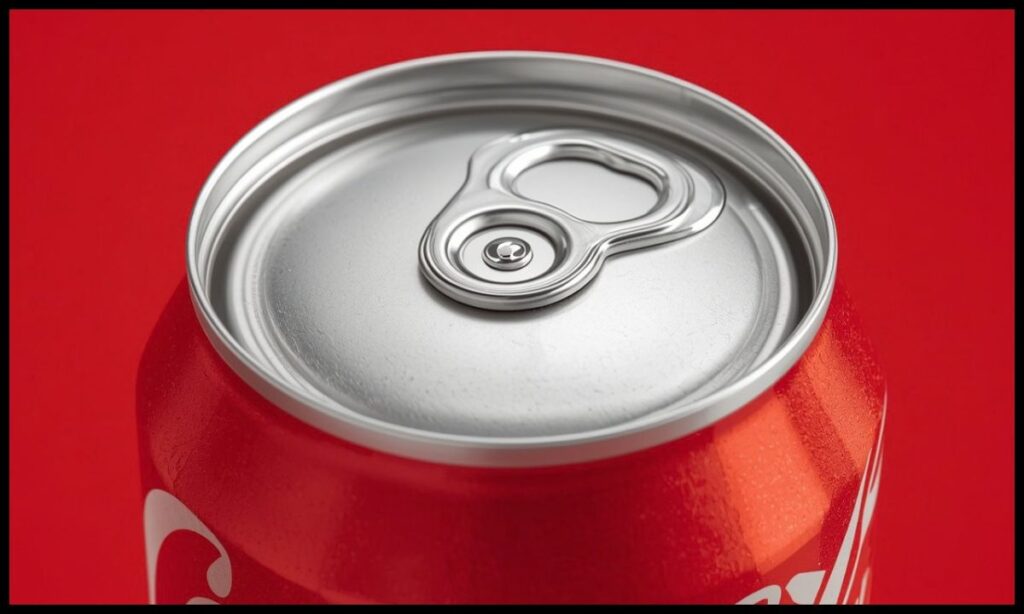
A Coke can looks like one of those objects nobody thinks about twice. You pick it up, take a sip, toss it in the recycling bin, and thats the end of the story. But wrap a measuring tape around it, and suddenly the humble Coke can circumference becomes surprisingly interesting. The curve of the aluminum, the width of the body, the smaller lid, and even the height are all part of a carefully designed package.
For the familiar 12 oz Coke can, a commonly cited body diameter is about 2.6 inches, while its height is roughly 4.83 inches. From those two simple numbers, we can estimate the distance around the can using a basic geometry formula. Of course, exact dimensions can vary by market, manufacturer, and can format, so a real can may not match a reference measurement perfectly.
Whether you’re designing packaging, organizing a refrigerator, checking a cup holder, planning cooler space, or simply wondering how big around is a Coke can, understanding its measurements gives you a much better physical picture. And honestly, its a neat little example of geometry hiding in plain sight.
What Is the Coke Can Circumference?
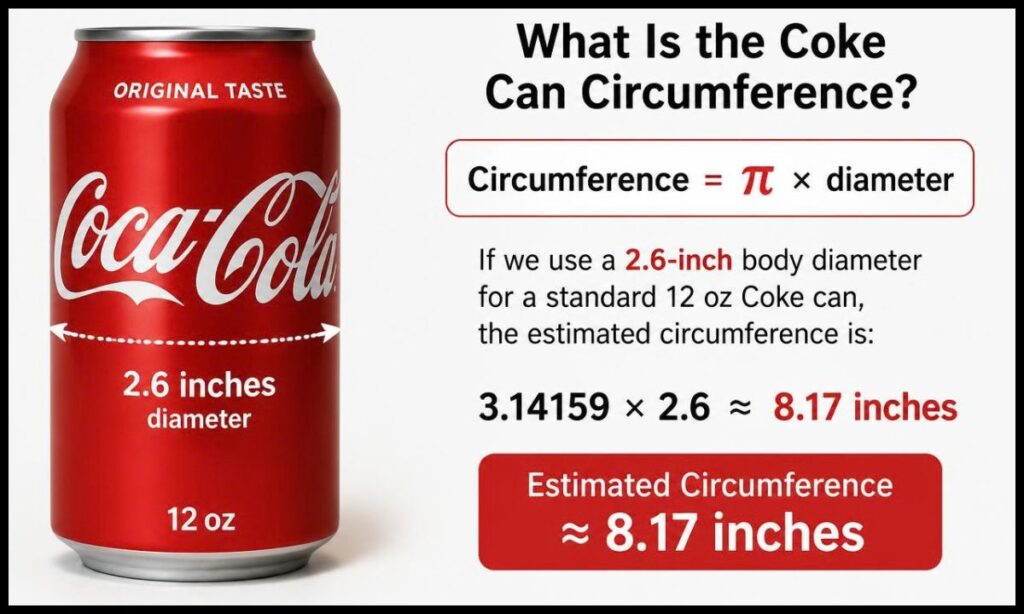
The circumference is the distance around a circular object. For a cylindrical beverage container, it tells you how far you would travel if you wrapped a measuring tape completely around the main body of the can.
The basic formula is:
Circumference = π × diameter
If we use a 2.6-inch body diameter for a standard 12 oz Coke can, the estimated circumference is:
3.14159 × 2.6 ≈ 8.17 inches
So, the circumference of a Coke can is approximately 8.17 inches around its main cylindrical body. Thats a useful everyday number, especially when you are trying to picture the can without having one nearby.
In centimeters, 8.17 inches is approximately 20.75 centimeters. The actual measured circumference can differ slightly because cans may have tapered sections, curved shoulders, seams, and other small design details.
How to Calculate the Circumference of a Coke Can
Calculating the Coke can circumference is easier than it sounds. You only need the diameter of the cylindrical section and the value of π.
Imagine placing a ruler across the widest part of the can body. If that distance is 2.6 inches, you have your diameter. Divide that diameter by two and you also get the radius, which would be approximately 1.3 inches.
Now use either of these formulas:
Circumference = π × diameter
or
Circumference = 2 × π × radius
Using the 2.6-inch diameter:
C = 3.14159 × 2.6
C ≈ 8.17 inches
This calculation is a good way to understand how big around is a Coke can without physically measuring it. Just remember that a can isn’t a mathematically perfect cylinder from top to bottom. The central body is the most useful area for this calculation.
Coke Can Dimensions at a Glance
The overall Coke can dimensions depend on the particular can format. A standard can sold in one market may not have precisely the same proportions as a can sold somewhere else.
For a commonly referenced 12 oz Coke can, the approximate dimensions are:
- Height: 4.83 inches
- Body diameter: 2.6 inches
- Radius: about 1.3 inches
- Estimated body circumference: about 8.17 inches
- Capacity: 12 fluid ounces
- Metric capacity: about 355 mL
These figures are best treated as practical reference measurements rather than universal manufacturing specifications. The Coke can size can change according to regional formats and product packaging requirements.
That distinction matters if you’re doing something precise, like creating a holder or designing packaging. A few millimeters suddenly stop being “just a few millimeters” when the object has to fit inside another object.
Standard 12 Oz Coke Can Circumference
The 12 oz Coke can circumference is especially useful because the 12-ounce format is one of the familiar soda-can sizes in the United States and other markets.
With a body diameter of approximately 2.6 inches, the mathematical circumference is around 8.17 inches. That’s roughly 20.75 centimeters around the central body.
The can’s top section isn’t identical to the body. The upper profile narrows toward the lid, meaning you shouldn’t wrap a tape measure around the lid and expect to get the same number. This is why Coke can measurements are usually described by several dimensions rather than one magic number.
If you’re asking, “What is the circumference of a standard Coke can?” the practical answer is around 8.2 inches for the main body, based on a 2.6-inch diameter reference.
What Is the Diameter of a Coke Can?
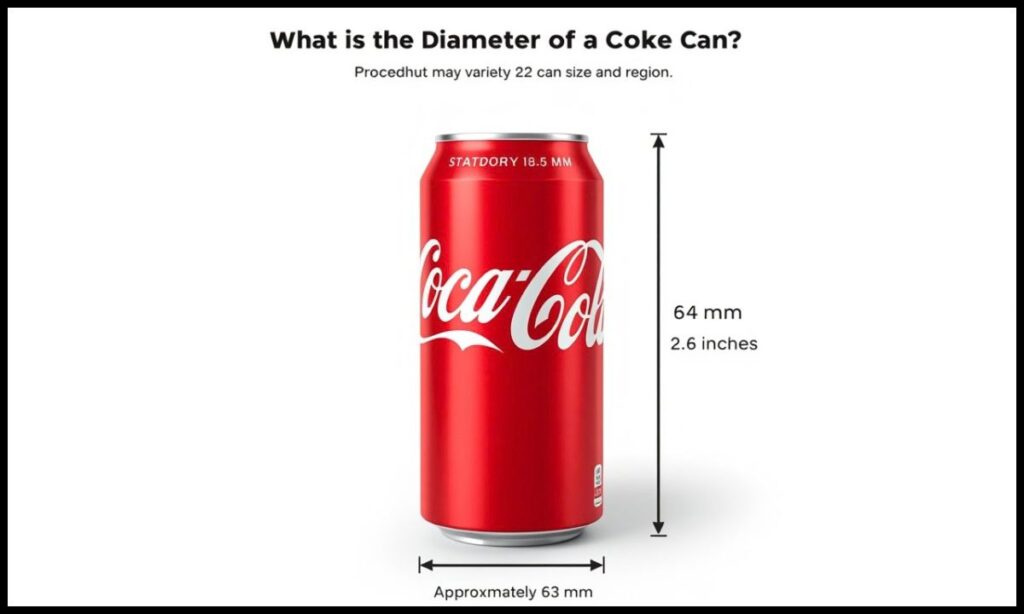
The Coke can diameter refers to the distance straight across the circular body of the container.
For a commonly referenced standard 12 oz Coke can, the body diameter is about 2.6 inches. The corresponding Coke can radius is approximately 1.3 inches, because radius equals half of diameter.
It sounds almost too simple, but this measurement is important everywhere. A Coke can has to work with cup holders, refrigerator shelves, vending machines, cartons, shipping boxes, and automated filling equipment.
The diameter also determines the circumference. Change the diameter, even slightly, and the distance around the can changes too. Geometry quietly controls quite a lot of beverage packaging, apparently.
How Tall Is a Standard Coke Can?
A commonly referenced 4.83 inch Coke can describes the height of a standard 12 oz format. That’s approximately 12.27 centimeters.
Height and circumference describe different aspects of the container. Two cans could have nearly the same circumference but very different heights and capacities. This is exactly what happens when comparing a regular can with a taller format.
The height also affects how cans fit into refrigerators, mini-fridges, vending machines, cartons, and other storage systems. A can that’s only a little taller may suddenly become awkward on a shelf with limited vertical clearance.
Coke Can Circumference in Inches and Centimeters
For people working between imperial and metric measurements, converting the circumference can make planning easier.
Using the approximate 2.6-inch diameter:
- Diameter: 2.6 inches
- Diameter: approximately 6.60 centimeters
- Estimated circumference: 8.17 inches
- Estimated circumference: approximately 20.75 centimeters
The word “estimated” is doing some important work here. A manufactured can has a physical shape with transitions and curves, while the formula assumes a perfect circle at the measured diameter.
So if you need the Coke can circumference in cm for a craft project, an approximate figure is perfectly useful. If you’re designing industrial packaging, however, you’d want the actual manufacturer’s specifications.
Different Coke Can Sizes and Their Measurements
Not every Coca-Cola can looks like the familiar 12 oz cylinder. Different capacities create different proportions, and some formats are noticeably narrower or taller.
Common formats include the 7.5 oz mini Coke can, the standard 12 oz Coke can, and the 16 oz tallboy Coke can.
7.5 Oz Mini Coke Can
A 7.5 oz mini Coke can holds approximately 222 mL. Its smaller volume makes it convenient for portion sizes, lunch boxes, gatherings, and situations where a full-size soft drink feels like too much.
The exact mini Coke can dimensions depend on the regional format, so its height and diameter shouldn’t automatically be assumed from the standard 12 oz can. Some mini formats are shorter, while others use a slimmer profile.
16 Oz Tallboy Coke Can
A 16 oz tallboy Coke can holds approximately 473 mL. Instead of simply becoming wider, a tallboy design often increases capacity by extending the container vertically.
That’s why the 16 oz Coke can dimensions can look dramatically different from a standard can even when the general cylindrical shape remains familiar.
A taller can can be useful for consumers wanting more beverage while still keeping a relatively narrow footprint. Thats packaging design doing its little balancing act.
Slim Coke Can
A slim Coke can uses a narrower body and a taller profile. Slim formats are common in the broader beverage market, including certain soft drinks and energy drinks.
Because the diameter is smaller, the slim Coke can circumference is also smaller than that of a wider standard can at the same height. But its exact dimensions depend heavily on the particular product and market.
Coke Can Circumference and Storage
A measurement becomes much more useful when you know what to do with it. The Coke can circumference can help explain why cans behave the way they do in everyday storage.
Think about a refrigerator shelf. Several cans can sit side by side because their cylindrical bodies use space efficiently. There are tiny gaps between them, of course, because real life refuses to pack objects perfectly.
The same principle matters in mini-fridges, coolers, lunch boxes, retail displays, and beverage cartons. The diameter determines the footprint of each can, while the height determines the vertical clearance.
For cooler packing, knowing the approximate can diameter can help estimate how many cans may fit across a particular width. For precise packing, though, always account for the actual interior dimensions of the cooler rather than assuming every millimeter is usable.
Coke Can Dimensions for Cup Holders
One reason the familiar can format works so well is that its relatively narrow cylindrical body fits many everyday holders.
Car cup holders are designed around common beverage-container shapes, although cup-holder dimensions vary substantially between vehicles. A standard can may sit comfortably in one holder and wobble around in another. Its not always the can’s fault.
The Coke can diameter is therefore more relevant than its circumference when you’re checking whether it will fit into a cup holder. Circumference tells you how much material would surround the can; diameter tells you how much horizontal space the can occupies.
That’s an important distinction when using Coke can dimensions for cup holders or designing a custom holder.
Coke Can Dimensions for Vending Machines and Retail
Vending machines are another place where standardized beverage can dimensions become useful.
A vending system has to move, store, and dispense cans reliably. If the container is too wide, too tall, or shaped unexpectedly, mechanical systems may struggle. Similar considerations appear in grocery-store shelving, product displays, refrigerated cases, and transportation packaging.
This is why soda packaging involves much more engineering than simply choosing a pretty label. The container needs to survive manufacturing, shipping, stocking, cooling, handling, and finally being opened by somebody who’s probably thirsty.
Coke vs Pepsi Can Size
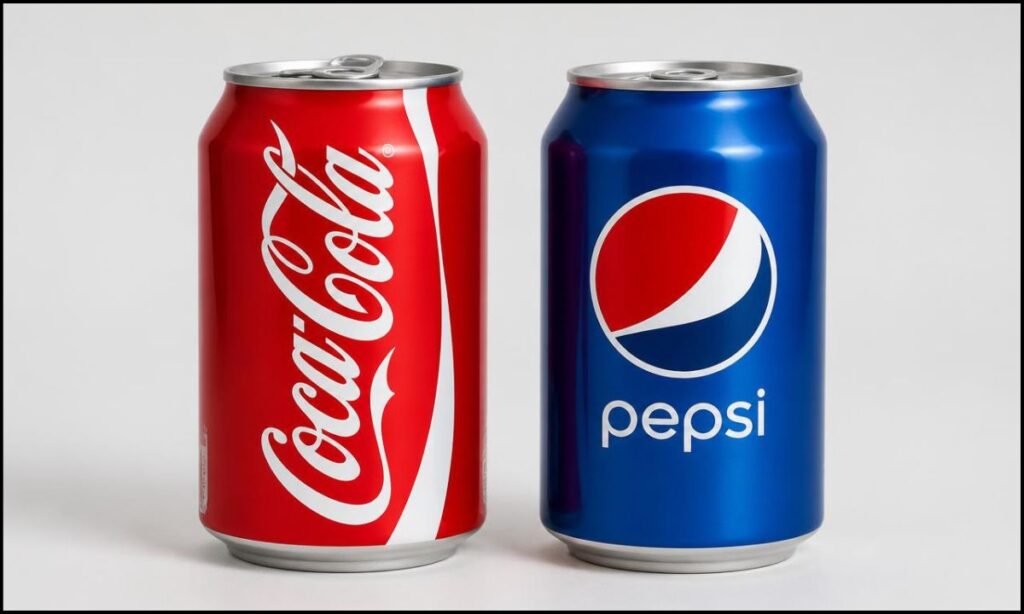
People often ask about Coke vs Pepsi can size, assuming the two brands must use identical dimensions.
The reality is more nuanced. Coke and Pepsi products may use common industry can formats, particularly for familiar capacities, but exact dimensions can vary according to the product, supplier, market, and packaging format.
The same is true when comparing cans from brands such as Sprite, Dr Pepper, Red Bull, Monster, or Celsius. A beverage can may share a general format with another product while having a different height, diameter, or capacity.
So when making a soda can dimensions comparison, compare the specific cans rather than assuming the brand name determines the size.
Why Coke Cans Have Different Shapes
At first glance, cans seem like basic cylinders. Look closer and you’ll notice a whole little landscape of curves.
The body has a relatively consistent diameter, while the shoulder transitions toward a narrower lid diameter. The top may include a tapered section, a recessed opening, and a pull tab. These details reduce material use, improve strength, and support the opening mechanism.
The can profile is therefore more complex than a simple tube.
The familiar shape is the result of engineering choices involving strength, material efficiency, manufacturing processes, transportation, and consumer handling. That tiny aluminum object sitting beside your keyboard has, frankly, been through a lot of engineering meetings.
Why Circumference Matters in Packaging
Knowing the circumference of a Coke can isn’t only useful for curious measurements. Packaging designers can use cylindrical dimensions to estimate wrapping requirements, label placement, spacing, and container arrangements.
If a label needs to cover the body of a can, its width must correspond closely to the distance around the container. That’s where circumference becomes practical.
For example, an approximate 8.17-inch circumference gives a rough idea of how much distance exists around a 2.6-inch-diameter cylindrical body. Real label specifications need overlap, seams, curvature, tolerances, and the manufacturer’s actual measurements, so the mathematical number isn’t automatically the finished label size.
How to Measure a Coke Can Yourself
If you have a can nearby, measuring it is actually more satisfying than trusting a number from the internet.
For the Coke can circumference, take a flexible measuring tape and wrap it around the widest cylindrical section of the body. Keep the tape level and snug, but don’t squeeze the aluminum.
For diameter, measure straight across the body through the center. A caliper gives a more precise result if you have one available.
You can then compare your direct measurement with the calculated value from the diameter. If they don’t match exactly, don’t panic. Manufacturing tolerances and the exact location where you measure can easily account for small differences.
Coke Can Size Around the World
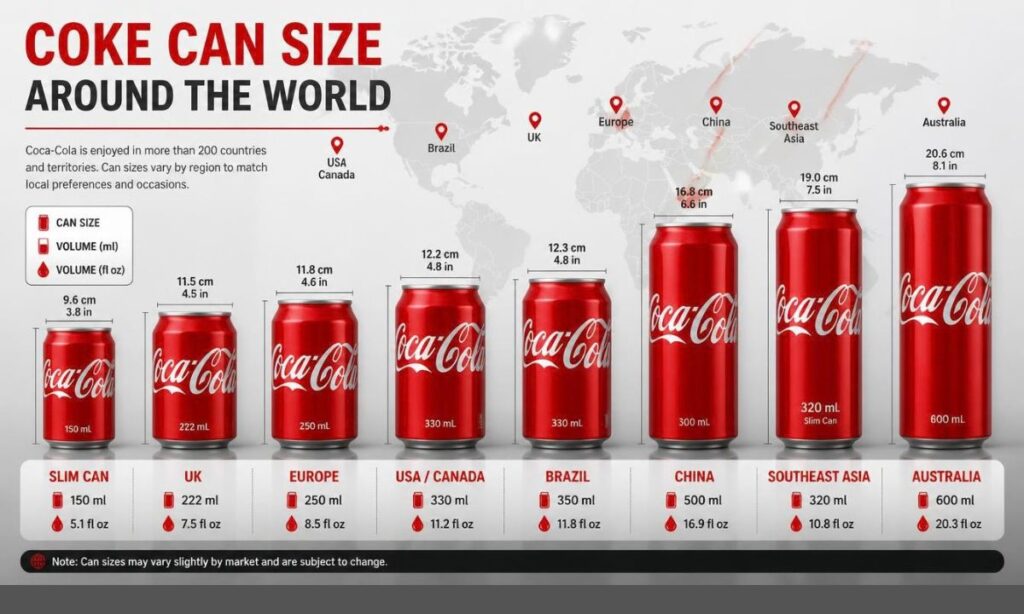
The phrase worldwide can make beverage packaging sound uniform, but can formats actually vary between North America, Europe, Australia, and various Asian markets.
A 355 mL can is common in some markets, while 330 mL and 375 mL formats are also widely encountered. Smaller 250 mL cans and other regional formats appear in different markets too.
This means Coke can size varies by country and by product. Even when two cans look almost identical, their capacities may differ.
Regional formats can reflect local consumption habits, packaging standards, retail expectations, and available manufacturing infrastructure. So a “standard Coke can” is not necessarily one universal object everywhere on Earth.
Coke Can Circumference for Practical Projects
If you’re using a can for a craft, display, school project, custom sleeve, or decorative project, the approximate Coke can circumference in inches can give you a useful starting point.
For a 2.6-inch diameter body:
C ≈ 8.17 inches
That means a strip of paper wrapped around the central body would need to be a little over eight inches long just to travel around once, before allowing for overlap or trimming.
In centimeters, that’s about 20.75 cm.
For anything requiring a snug fit, measure the actual can rather than relying solely on the reference number. Aluminum cans can have small dimensional differences, and your project probably doesn’t care about the mathematical elegance of π nearly as much as it cares about actually fitting.
Read more : What Does 100 Feet Look Like
Frequently Asked Questions
What is the circumference of a Coke can?
A commonly referenced standard 12 oz Coke can has a body diameter of about 2.6 inches, producing an estimated circumference of approximately 8.17 inches.
What is the circumference of a 12 oz Coke can?
Using a 2.6-inch body diameter, the 12 oz Coke can circumference is approximately 8.17 inches, or about 20.75 centimeters.
What is the diameter of a standard Coke can?
A commonly cited standard Coke can diameter is approximately 2.6 inches across the main cylindrical body.
What is the radius of a Coke can?
If the body diameter is 2.6 inches, the Coke can radius is approximately 1.3 inches.
How big around is a Coke can?
A standard 12 oz format is approximately 8.17 inches around its main cylindrical body based on a 2.6-inch diameter.
How tall is a standard Coke can?
A commonly referenced standard 12 oz format is about 4.83 inches tall, although exact dimensions vary by market and can design.
How much does a standard Coke can hold?
A standard U.S.-style can commonly holds 12 fluid ounces, equivalent to approximately 355 mL.
Are Coke and Pepsi cans the same size?
They may use similar industry-standard formats, but exact dimensions can vary by product, market, and packaging supplier, so individual cans should be measured when precision matters.
Conclusion
The Coke can circumference is a small measurement with a surprisingly large number of practical connections. From the approximately 8.17-inch circumference of a 2.6-inch-diameter body to the roughly 4.83-inch height of a common 12 oz format, every dimension helps explain why the familiar can fits so naturally into refrigerators, vending machines, coolers, cartons, and human hands.
Different formats, including the 7.5 oz mini Coke can, 12 oz Coke can, 16 oz tallboy Coke can, and slim Coke can, show how changing capacity can reshape the container. And when you compare regional formats, you discover that there really isn’t one single can dimension that rules the entire world.
So next time a Coke can is sitting nearby, look at it slightly differently. Its circumference isn’t just a number. It’s the distance around a carefully engineered little cylinder that has to travel from factory machinery to warehouse shelves, from a refrigerator to a cup holder, and eventually into someone’s hand. Pretty ordinary object, rather interesting geometry.