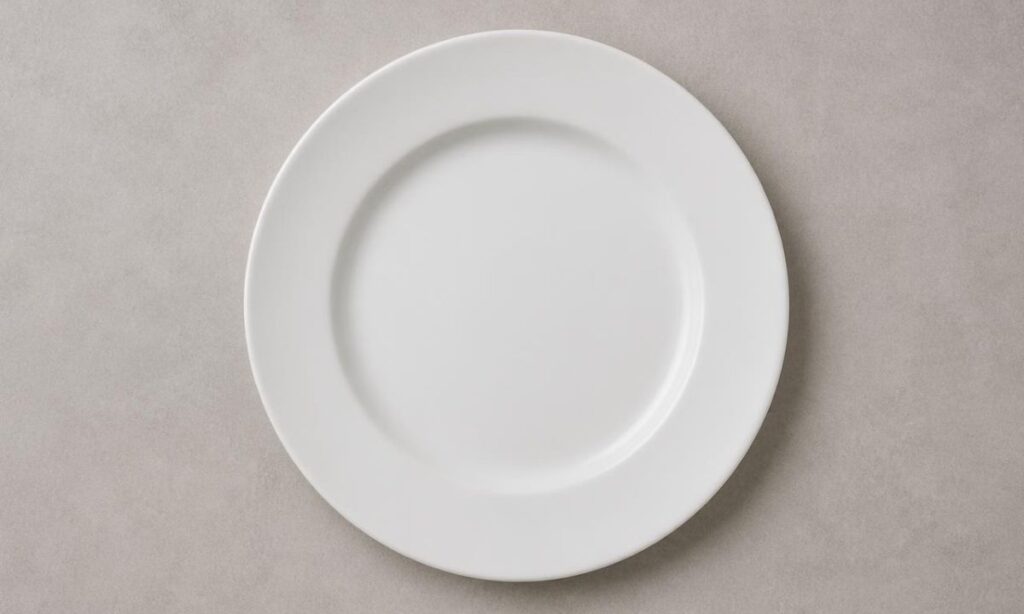
Imagine sitting down at a nicely prepared dining table, with warm food in the middle, glasses catching a little light, and a plate that somehow makes the whole meal look more inviting. Funny thing is, we rarely stop to think about the plate itself. We just use it. But the size of that plate can change how a meal looks, how much food fits on it, and even how the entire table setting feels.
So, what is the standard dinner plate size? In most homes and restaurants, a standard dinner plate measures about 10 to 12 inches (25.5 to 30.5 cm) in diameter. That range is common enough to be considered the typical size, although modern dinnerware collections can be smaller or larger depending on their purpose.
The interesting part is that there isn’t one universal plate measurement stamped into the laws of dinnerware. A 10-inch plate can feel quite different from a 12-inch plate, even though both are considered ordinary dining plates. The shape, rim, depth, material, and design all matter too, which is where things get a little more interesting.
What Is the Standard Dinner Plate Size?
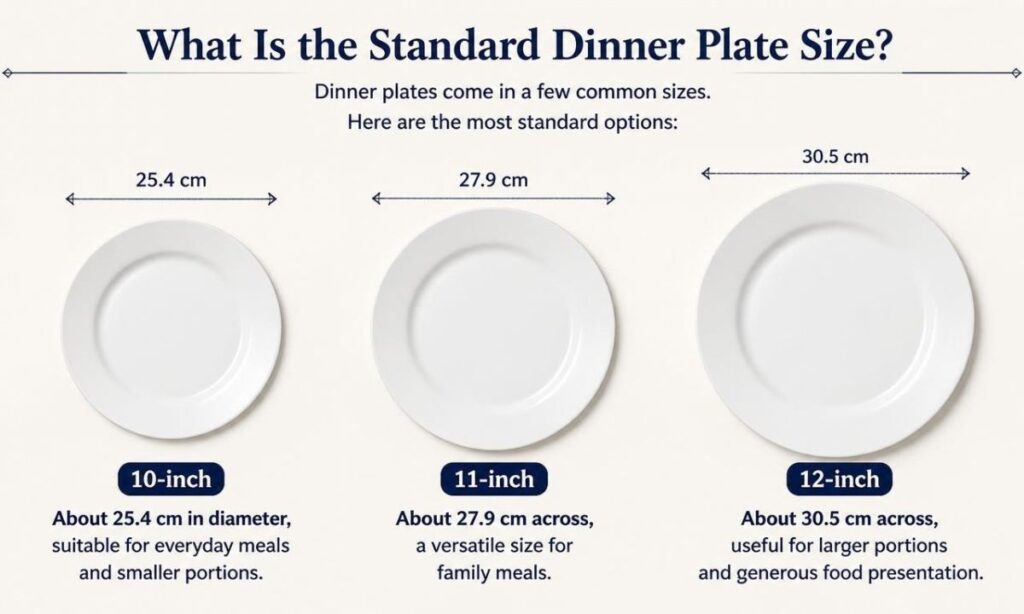
A typical standard dinner plate is between 10 and 12 inches wide, or approximately 25.5 to 30.5 centimeters across. The measurement refers to the plate diameter, taken straight across the widest part of the circular plate.
For everyday meals, an 11-inch plate often feels like a comfortable middle ground. A 10-inch dinner plate gives a slightly more compact appearance, while a 12-inch dinner plate offers extra room for a generous main course and several side dishes.
Plate sizes can vary by country, manufacturer, restaurant style, and dinnerware collection, so the word “standard” should be understood as a common range rather than one exact number. Thats an important little detail when shopping for replacement plates.
- 10-inch dinner plate: About 25.4 cm in diameter, suitable for everyday meals and smaller portions.
- 11-inch dinner plate: About 27.9 cm across, a versatile size for family meals.
- 12-inch dinner plate: About 30.5 cm across, useful for larger portions and generous food presentation.
If you’re asking how big is a dinner plate, picturing a dinner plate roughly the width of a large ruler laid across a circle can help. A 12-inch plate is exactly one foot across, which makes its size surprisingly easy to visualize.
Standard Dinner Plate Dimensions in Inches and Centimeters
When comparing dinner plate dimensions, diameter is usually the measurement people care about most. Round plates are generally described by their diameter rather than their circumference, width, or height.
For example, a plate measuring 11 inches from one edge to the opposite edge has a diameter of 11 inches. Converted to centimeters, that is approximately 27.9 cm. The plate circumference is much larger because it measures all the way around the outside edge.
| Plate Size | Approx. Diameter | Common Use |
|---|---|---|
| 5–6 inches | 12.5–15 cm | Bread, butter, small sides |
| 6–8 inches | 15–20 cm | Appetizers and light meals |
| 8–10 inches | 20–25 cm | Salads and desserts |
| About 9 inches | 23 cm | Lunch |
| 10–12 inches | 25.5–30.5 cm | Main dinner meals |
| About 13 inches | 33 cm | Charger or decorative base |
The actual plate dimensions may differ slightly because some plates have wide rims, raised edges, or unusual shapes. A plate advertised as 12 inches may have less usable interior space than a plain 12-inch plate with a narrow rim.
How Wide Is a Dinner Plate?
If you’re wondering how wide is a dinner plate, the answer is generally between 10 and 12 inches for a standard full-size dinner plate. In centimeters, that’s roughly 25.5 to 30.5 cm.
An important thing to remember is that “wide” and “diameter” are usually describing the same measurement when the plate is round. If the plate is square, oval, or irregularly shaped, its dimensions might instead be written as length by width.
A 10 inch dinner plate is often a practical choice for ordinary meals. An 11 inch dinner plate gives a little more breathing room around the food, while a 12 inch dinner plate creates a broader canvas for larger meals or decorative plating. You could say the plate size quietly sets the stage before the food even arrives.
Standard Plate Size Chart
A plate size chart makes it easier to understand why dinnerware collections contain several different plates. Not every plate is intended to carry a steak, vegetables, bread, and dessert all at once.
Standard Dinner Plate
- Size: 10–12 inches / 25.5–30.5 cm
- Purpose: Main meals
- Typical foods: Meat, pasta, rice, vegetables, potatoes, casseroles
Lunch Plate
- Size: About 9 inches / 23 cm
- Purpose: Lunches and lighter meals
- Typical foods: Sandwiches, salads, wraps, small portions
Bread and Butter Plate
- Size: 5–6 inches / 12.5–15 cm
- Purpose: Individual bread service
- Typical foods: Bread, rolls, butter, small spreads
Appetizer Plate
- Size: 6–8 inches / 15–20 cm
- Purpose: Small starters
- Typical foods: Finger foods, hors d’oeuvres, small appetizers
Salad Plate
- Size: 8–10 inches / 20–25 cm
- Purpose: Salads and fresh greens
- Typical foods: Garden salads, pasta salads, vegetable combinations
Dessert Plate
- Size: 8–10 inches / 20–25 cm
- Purpose: Desserts and sweets
- Typical foods: Cake, pastries, pie, fruit
Single-Dessert Plate
- Size: 6–8 inches
- Purpose: Individual dessert servings
- Typical foods: Cake slices, cookies, brownies, small pastries
Charger Plate
- Size: About 13 inches / 33 cm
- Purpose: Decorative base for formal meals
- Typical use: Weddings, banquets, receptions, formal dining
This range shows why there isn’t really one “standard plate” for every occasion. Dinnerware sizes are designed around different foods, courses, and serving traditions.
Different Types of Plates and Their Uses
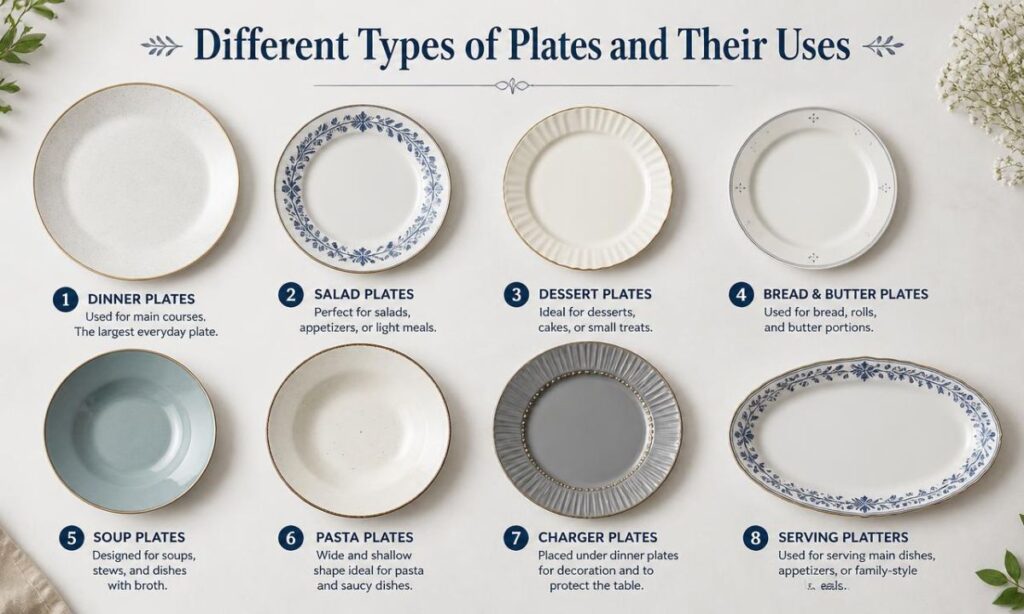
Once you look beyond the main dinner plate, the world of plate types becomes surprisingly crowded. What looks like a collection of similar circles in a cabinet actually has a little system behind it.
A luncheon plate or lunch plate is usually around 9 inches, making it smaller than a full dinner plate. It’s useful for sandwiches, soups served alongside bread, salads, or other light meals.
A bread and butter plate, sometimes simply called a side plate, is much smaller. At around 5 to 6 inches, it gives bread, rolls, and butter their own little place without filling the entire table with oversized dishes.
The appetizer plate usually falls around 6 to 8 inches. That’s enough space for small portions of cheese, vegetables, finger foods, or hors d’oeuvres without turning a starter into a full meal.
A salad plate is commonly 8 to 10 inches. It may look nearly like a dinner plate at first glance, but the smaller surface is better suited to salads and fresh greens. A dessert plate often shares a similar size, though individual dessert plates can be smaller.
Then comes the charger plate, which is a different creature altogether. At about 13 inches, it is usually larger than the dinner plate and acts as a decorative base in a formal setting. It may also be called a service plate or underplate, depending on the context and dining tradition.
Standard Dinner Plates for Casual Dining
For casual dining, the best plate size often comes down to what your household actually eats rather than what looks impressive in a catalogue. A family that serves modest portions may find 10-inch plates perfectly comfortable.
For family meals and weeknight meals, plates around 10 to 11 inches are especially practical. They provide enough room for a main course, vegetables, rice, potatoes, or another side without making the table feel crowded.
Storage matters too. Twelve-inch plates look lovely when spread across a large table, but they can become slightly annoying when your kitchen cabinet was clearly designed by somebody who has never met a 12-inch plate. Before purchasing, check both cabinet and dishwasher space.
Dinner Plate Size for Formal Dining and Fine Dining
Formal dining uses plates somewhat differently from ordinary home meals. Instead of putting every course on one large plate, a formal table setting may use several pieces of tableware.
A charger can sit beneath the dinner plate, creating a layered appearance. A salad plate may be added for the salad course, followed by a dinner plate for the main course. Dessert may arrive on a separate smaller plate.
In fine dining, plate size can also be influenced by presentation. Chefs sometimes use larger plates because the empty space around food helps create a deliberate visual composition. The plate becomes almost part of the culinary experience, not merely something holding the food.
At weddings, banquets, and other special occasions, decorative chargers and coordinated decorative plates can make a table feel more formal without changing the food itself. The plate doesn’t cook the meal, obviously, but it does frame it.
Plate Size for Food Portions
Plate size can influence how much food appears on the table. A larger plate gives food more surrounding space, while a smaller plate makes the same amount of food appear more substantial.
This is one reason plate size for food portions is worth considering. If your household tends to serve moderate portions, a 10-inch plate may be more practical than a very large 12-inch model.
That doesn’t mean a certain plate automatically controls how much someone eats. Food choices, hunger, serving habits, and individual needs all matter. The plate is simply one part of the visual and practical environment.
For a balanced dinner, you might place the main course in one section, vegetables or side dishes alongside it, and leave enough room so everything doesn’t become one accidental mountain of food. Presentation matters, but nobody needs a geometry degree to serve dinner.
Dinner Plates for Dinner Parties and Special Occasions
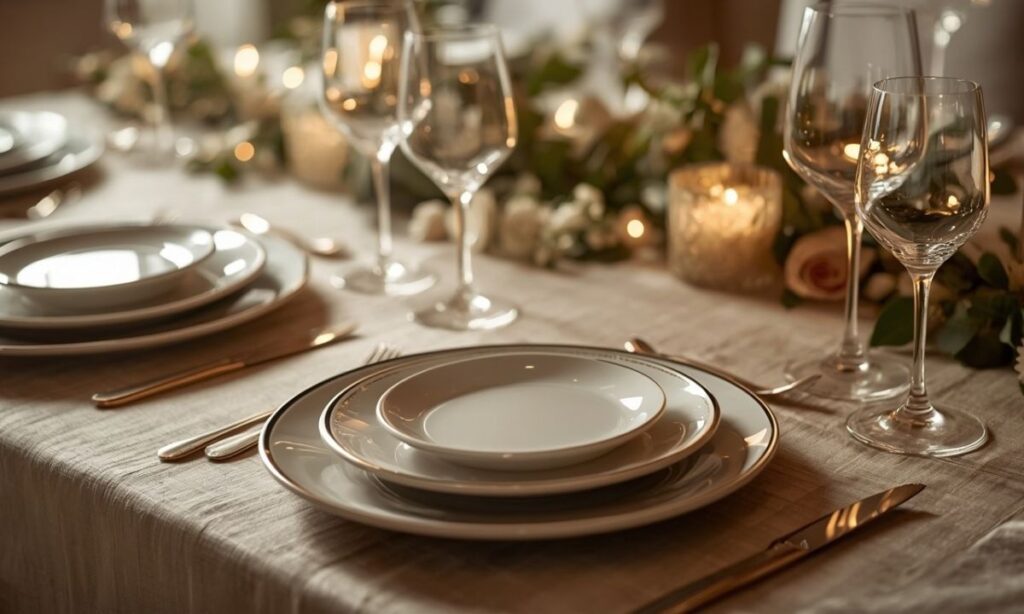
When you’re choosing plates for dinner parties, appearance may become just as important as size. A simple white 11-inch plate can look elegant with almost any food, while patterned plates may create a more distinctive atmosphere.
For special occasions, people often choose coordinated dinnerware with decorative rims, subtle textures, or seasonal patterns. Weddings, receptions, and formal celebrations may use chargers beneath standard dinner plates to create additional visual layers.
At cocktail parties, however, a standard dinner plate may not be necessary at all. Smaller appetizer plates are often more convenient for finger foods, sandwiches, cheese, pastries, and other easy-to-hold items.
The same principle applies to casual social gatherings. A plate should fit the food and the mood. A huge formal plate at a backyard gathering can feel a little overdressed, while tiny appetizer plates at a full family dinner can become a logistical comedy.
Choosing the Right Dinner Plate Size
When choosing dinner plates, start with your everyday routine. Think about what you actually serve rather than what looks attractive in a photograph.
If most meals are simple, an 10- or 11-inch plate may be enough. If you frequently serve large portions, substantial main courses, or several side dishes, 12 inches can provide useful extra space.
Consider the following before buying:
- Meal style: Casual meals may work well with 10–11 inch plates.
- Food portions: Larger portions may need a 12-inch surface.
- Storage: Measure your cabinets and shelves before buying.
- Dishwasher: Make sure the plate fits comfortably inside.
- Table size: Large plates can crowd a small dining table.
- Material: Ceramic, porcelain, stoneware, melamine, and glass all have different weights and handling characteristics.
- Design: Wide rims and decorative patterns reduce the usable food area.
- Dinnerware collection: Check whether replacement pieces will coordinate with existing tableware.
A little measuring before shopping can save a surprisingly large amount of annoyance later. Nobody wants beautiful new plates that refuse to fit in the cupboard.
Plate Shape, Material, and Design Matter Too
Size is only one part of a good plate. Two plates can both measure 11 inches and still feel completely different.
A plate with a broad rim may have less central space than a flat plate with almost no border. A deep-rimmed plate can help contain sauces, while a flatter plate may be better for foods that need more spreading space.
Material also changes the dining experience. Porcelain can create a refined appearance, stoneware often feels sturdy and casual, and lightweight materials can be useful for outdoor dining.
Then there is the visual side. Decorative patterns, colors, textures, and shapes can turn ordinary dining plates into part of the room’s personality. A simple meal served on attractive tableware can somehow feel like an occasion, even when Tuesday remains stubbornly Tuesday.
Standard Dinner Plate Size Around the World
Although the 10–12 inch range is common for modern dinner plates, plate traditions aren’t identical everywhere. Some cultures use smaller plates alongside bowls, while others serve meals in shared dishes and use individual plates mainly as a base for portions.
In many Asian dining traditions, for example, bowls can play a major role alongside plates. Rice, soup, vegetables, and other dishes may be presented separately. In other dining styles, one broad plate may carry most of the meal.
Terms such as quarter plate, side plate, and luncheon plate can also vary in everyday usage from one region to another. That’s why online shopping descriptions should be checked carefully instead of relying on the name alone.
The physical measurement in inches or centimeters is much less ambiguous. If a listing says the diameter is 28 cm, you know roughly what you’re getting regardless of what the seller calls it.
Common Dinner Plate Sizes at a Glance
If you simply need a quick reference, here are the most common different plate sizes to remember:
- 5–6 inches: Bread and butter plate or small side plate.
- 6–8 inches: Appetizer plate or small dessert plate.
- 8–10 inches: Salad plate or dessert plate.
- About 9 inches: Lunch or luncheon plate.
- 10–12 inches: Standard dinner plate.
- About 13 inches: Charger plate.
This simple breakdown is useful when comparing common plate sizes, especially if you’re building an entire dinnerware collection rather than purchasing one replacement plate.
Read more : How Much Does a Heavy Bag Weigh?
Frequently Asked Questions
What Is the Standard Dinner Plate Size?
A standard dinner plate is usually 10 to 12 inches (25.5 to 30.5 cm) in diameter, making it suitable for most everyday meals.
How Wide Is a Standard Dinner Plate?
Most standard dinner plates are about 10–12 inches wide, although the exact size can vary by brand, design, and dinnerware style.
What Are Common Dinner Plate Sizes?
Common sizes include 10-inch, 11-inch, and 12-inch plates, with each offering different amounts of space for main courses and side dishes.
What Size Plate Is Best for Everyday Dining?
An 11-inch dinner plate offers a practical balance of food space, portion size, storage, and table presentation for everyday dining.
Conclusion
The standard dinner plate size is generally 10 to 12 inches (25.5–30.5 cm) in diameter, with 10, 11, and 12-inch plates being especially common choices. But the “right” size depends on the meal, the table, the storage space, and the style of dining you enjoy.
A 10-inch plate may feel neat and practical for everyday use. An 11-inch plate offers a comfortable balance for many family meals, while a 12-inch plate provides more room for generous portions and attractive presentation. None of these sizes is universally perfect, and thats actually the useful part of knowing the range.
Smaller plates have their own jobs too. A 9-inch lunch plate, 6-inch bread plate, 8-inch appetizer plate, or 10-inch salad plate can make a complete dinnerware collection much more functional.
Ultimately, plates are more than measurements. They frame family meals, support the culinary experience, and become part of birthdays, dinner parties, weddings, quiet weeknight dinners, and those random evenings when everyone is hungry at once.
So, when someone asks, “What is the standard size of a dinner plate?” you can give the simple answer: about 10–12 inches across. But now you also know why that little range tells a much bigger story about food, presentation, practicality, and the way people gather around a table.
Explore More Blogs