Buying a dress can feel strangely complicated. One store says you are a M, another calls you an L, and suddenly the innocent act of choosing a dress becomes a small detective story. The good news is that a size label is only a starting point; your actual bust, waist, hips, height, and the cut of the garment tell a much better story.
This dress size guide explains how women’s dress sizes work, how to take accurate body measurements, how to read a dress size chart, and how to handle US, UK, European, and other international sizing systems. It also covers party dress sizes, petite and curvy options, and what to do when a dress is almost right but needs a little tailoring.
Whether you’re preparing for a wedding, buying a ladies’ party dress, refreshing your wardrobe, or doing online dress shopping from a different country, a few careful measurements can save you from a disappointing checkout moment.
What Is a Dress Size Guide?
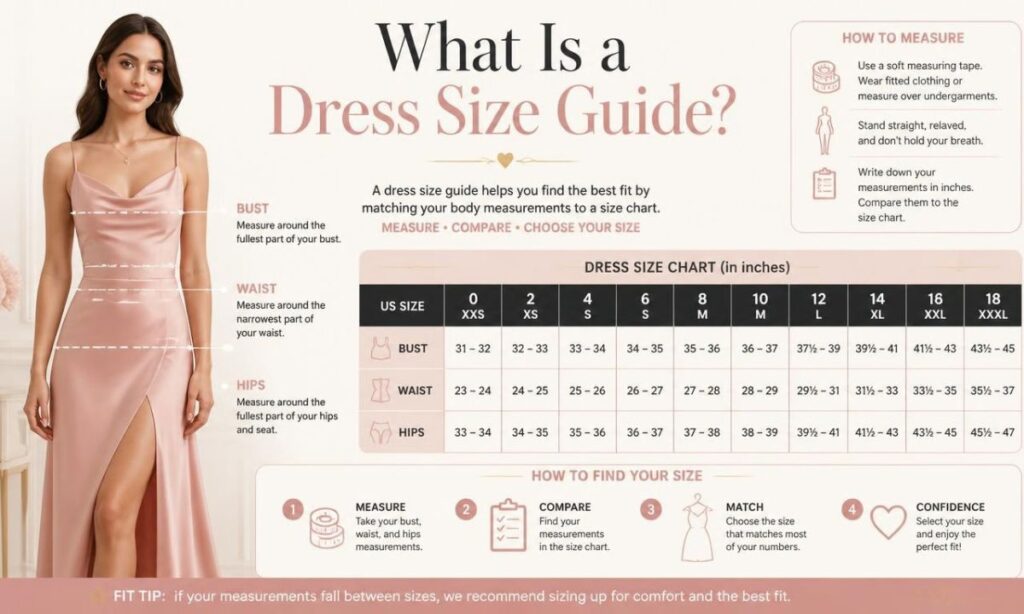
A dress sizing guide is a reference that connects clothing sizes with measurements such as bust, waist, and hip circumference. It helps shoppers compare their measurements with a brand’s recommended sizing rather than relying entirely on a familiar label.
A dress size is not a universal measurement, though. A size 8 from one clothing brand can fit differently from a size 8 somewhere else. That’s because brands develop their own patterns, cuts, and brand sizing standards, so the number on the tag doesn’t tell the whole story.
Think of the label as a nickname and your measurements as the actual introduction. The label may say S, M, or L, while your tape measure tells you what is really happening.
How to Take Your Body Measurements for a Dress
Before opening a dress size chart, grab a flexible measuring tape, stand naturally, and wear lightweight clothing or something close-fitting. Don’t pull the tape so tightly that it leaves a mark, because your dress shouldn’t need to negotiate with your ribs all day.
Knowing how to measure yourself for a dress is especially useful when shopping online. Measure in the same units used by the retailer, usually inches or centimeters, and write the numbers down before comparing them with the chart.
Bust Measurement
Wrap the measuring tape around the fullest part of your chest. Keep the tape level across your back and avoid holding your breath or puffing out your chest.
This is your bust measurement, and it becomes especially important for fitted, strapless, halter-neck, and structured dresses. A dress can fit perfectly around the waist but still feel uncomfortable if the bust measurement is too small.
Waist Measurement
Find your natural waistline, usually the narrowest part of your torso. Wrap the tape around it without pulling hard.
This waist measurement matters most with fitted dresses, pencil-style silhouettes, belts, and dresses that have structured waist seams. For relaxed clothing, the waist may be less restrictive.
Hip Measurement
Measure around the fullest part of the hips, keeping the tape horizontal. This generally includes the fullest area around the hips and buttocks.
Hip measurements are particularly important for fitted dresses, pencil dresses, bodycon styles, and some formal gowns. If your hip measurement falls into a different size than your bust, don’t panic—the dress’s cut and fabric determine what matters most.
Height and Dress Length
Your height can affect how a dress sits, especially with maxi, tea-length, and long formal styles. Someone who is 5’4″ height may need a different length from someone considerably taller, even when both wear the same numerical size.
For longer dresses, also pay attention to dress length and, when relevant, leg length or inseam. A dress that reaches the ankle on one person might become a puddle near the floor on another. Fashion has its drama already; the hem doesn’t need to join in.
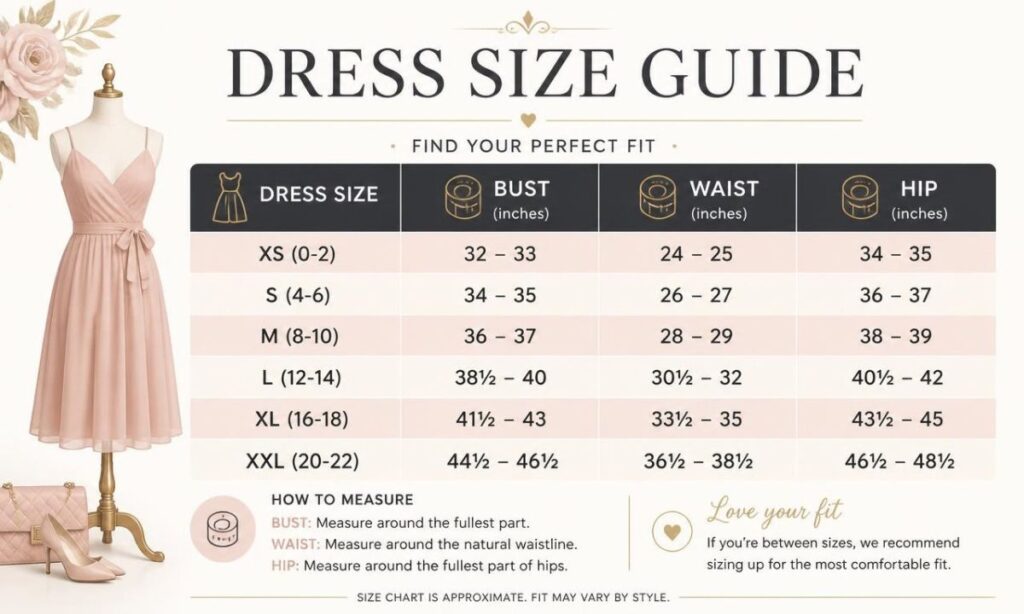
Women’s Dress Size Chart
A typical women’s dress size chart may use numerical sizes such as 0, 2, 4, 6, 8, 10, 12, 14, 16, and 18, while other brands use letter sizes such as XS, S, M, L, and XL.
The important thing is that these categories are general guides, not universal rules. Actual measurements can vary considerably between manufacturers.
| General Size | Common Numerical Range |
|---|---|
| XS | 0–2 |
| S | 4–6 |
| M | 8–10 |
| L | 12–14 |
| XL | 16–18 |
| 1X | 16W–18W |
| 2X | 20W–22W |
| 3X | 24W–26W |
| 4X | 28W–30W |
This table is only a broad reference for understanding standard dress sizes. Always check the individual retailer’s size information before making a dress purchase, because sizing differences can be surprisingly large.
Understanding Women’s Standard Dress Sizes
Women’s standard dress sizes commonly combine numerical labels with body measurements. In many stores, you may encounter 0 through 18, while other retailers organize their women’s clothing sizes primarily around XS through XL.
There isn’t one worldwide definition of a standard size. Clothing patterns are developed differently by different brands, and historical sizing systems have changed over time.
That’s why asking, “What size am I?” without knowing the brand is a little like asking, “How long is a piece of string?” There is an answer, but you need more information first.
What Do XS, S, M, L, and XL Mean?
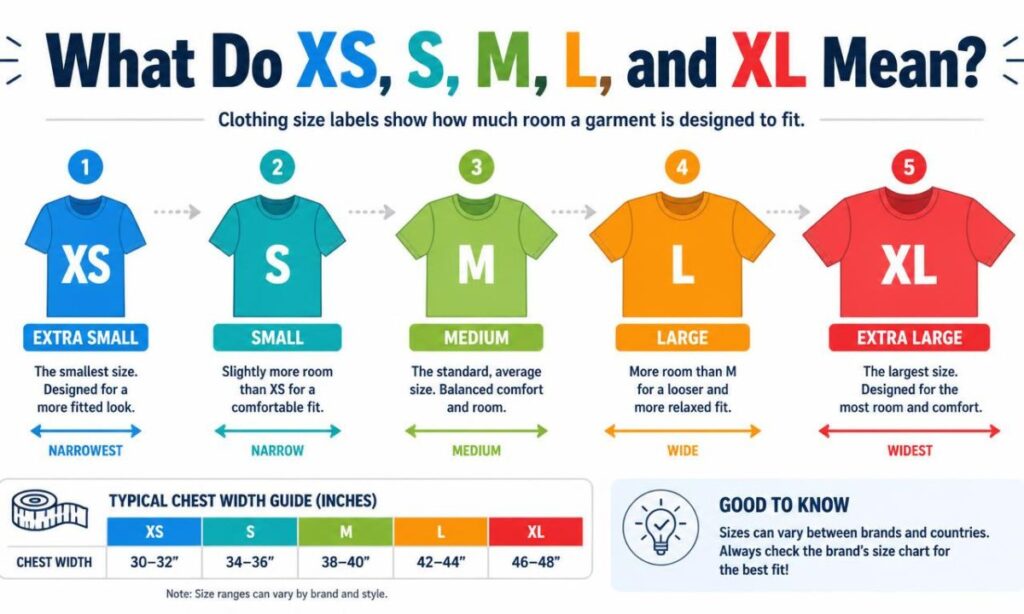
The letters XS, S, M, L, and XL generally mean extra small, small, medium, large, and extra large.
However, these labels aren’t measurements by themselves. One brand’s M might correspond to a different bust or hip measurement than another brand’s M. Always connect the letter to the actual measurements shown in the clothing size guide.
For example, a retailer might define its medium differently from another retailer. Neither is necessarily “wrong”; they’re simply using different patterns and sizing standards.
Plus Size and Curvy Dress Sizes
Modern curvy dress sizes and plus size collections are designed around different proportions and grading systems. You may see sizes such as 1X, 2X, 3X, and 4X, as well as numerical sizes marked with a W, such as 12W, 14W, 16W, 18W, 20W, 22W, 24W, 26W, and 28W.
A plus size dress chart should be checked using measurements rather than assuming that a particular W size corresponds exactly to a standard numerical size.
The term “curvy” can also describe proportions rather than simply a larger size. Two people can have the same waist measurement while having noticeably different bust and hip proportions. Clothing patterns have to account for that difference.
What Is a Petite Dress Size?
A petite size is generally designed for shorter proportions, often for women around 5’4″ or shorter, although the exact height range varies by brand.
Petite clothing isn’t simply a smaller version of regular clothing. It can involve adjustments to the bodice, sleeve placement, waist position, rise, and overall dress length.
So if you’re shorter and regularly find that a standard dress has a waist sitting too low or sleeves that seem oddly long, petite dress sizing may solve more than simply choosing a smaller numerical size.
Party Dress Size Guide
Choosing party dress sizes requires a little extra attention because formal and special-occasion dresses are often more fitted than everyday clothing.
A party dress size chart can help you compare your bust, waist, and hip measurements with the garment’s intended measurements. But also look at the fabric, closure, silhouette, and amount of stretch.
A fitted cocktail dress made from non-stretch fabric needs more precise measurements than an oversized party dress. A flowing maxi dress may be more forgiving around the hips, while a fitted ball gown bodice can be much less forgiving.
For a women’s party dress size chart, check:
- Bust measurement
- Waist measurement
- Hip measurement
- Dress length
- Shoulder or sleeve measurements when provided
- Fabric stretch
- Closure type
- Brand-specific sizing
The question “how should a party dress fit?” is therefore more useful than simply asking what number you normally wear.
Dress Styles Can Change the Right Size
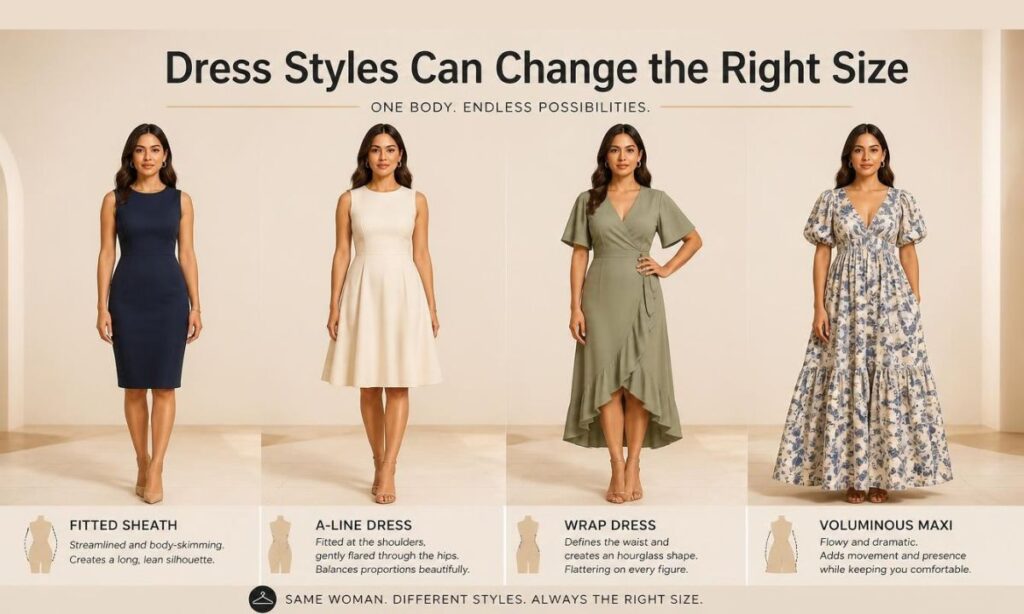
The style of a dress affects how measurements behave. A mini dress, midi dress, tea-length dress, and maxi dress can all have different fitting priorities.
A fitted dress usually needs accurate bust, waist, and hip measurements. An oversized dress may allow considerably more room. A strapless dress depends heavily on bust and upper-body fit because there are no shoulder straps helping to hold it in place.
A one-shoulder dress, halter neck dress, cowl neck dress, puff sleeve dress, or backless dress can also introduce special fitting considerations. And a lacing back dress may provide more adjustability than a conventional zipper.
This is why a single dress size chart can’t predict every possible fit.
International Dress Sizes
Shopping internationally introduces another layer of confusion because the same general body measurement can be represented by different numbers.
You may encounter US dress size, UK dress size, French, Italian, Japanese, or Australian sizing. These systems don’t always convert perfectly because individual brands can modify traditional size conventions.
A dress size conversion chart is useful as a starting point, but measurements should remain your final checkpoint.
Common International Size Systems
- US sizing commonly uses numerical women’s sizes such as 0, 2, 4, 6, 8, 10, 12, and higher.
- UK sizing uses a different numerical sequence from US sizing.
- European sizing often uses larger numerical values than US sizing.
- French dress size and Italian dress size follow their own numbering conventions.
- Japanese dress size may use another sizing framework altogether.
- Australian dress size often resembles certain UK-style numerical conventions but should still be checked against the brand’s measurements.
For international size conversion, don’t rely on a mental calculation alone. A retailer’s own international women’s clothing sizes chart is more useful because the brand has already defined how its garments are cut.
Dress Size Conversion: US, UK, and European Sizing
If you’re wondering how to convert US dress sizes to UK sizes, start with the retailer’s official conversion table. General conversion rules can be helpful, but they can become unreliable when a brand uses its own sizing.
The same applies to US to European dress size conversion, US to Japanese dress size conversion, and US to Australian dress size conversion.
When buying internationally, check three things:
- The country’s size label
- The brand’s conversion chart
- The garment’s actual bust, waist, and hip measurements
That three-part check is much safer than trusting a single conversion number floating around the internet.
How to Read a Dress Size Chart
Knowing how to read a dress size chart is one of the most useful shopping skills you can develop.
First, identify whether the chart lists body measurements or garment measurements. Those aren’t always the same. A garment can be larger than the body measurements because it includes ease for movement.
Next, find your bust, waist, and hip measurements. Compare each one with the appropriate row.
If your measurements fall across multiple sizes, look at the dress’s construction. For a fitted dress, the largest relevant measurement may determine the size, while a loose silhouette can offer more flexibility.
What If Your Measurements Fall Between Two Sizes?
This happens all the time. Bodies don’t come with factory-installed sizing labels, thankfully.
If your bust suggests one size and your hips suggest another, look at the garment’s cut and fabric. A stretchy dress may accommodate a small difference, while a rigid fitted dress may require a different approach.
For formalwear, choosing the larger size and arranging dress alteration can sometimes be practical because a tailor can take in a dress more easily than adding substantial fabric where none exists.
Still, don’t automatically size up every time. Examine the measurements and construction first.
How Dress Fitting Works
Good dress fitting isn’t simply about whether you can pull the zipper closed. A well-fitted dress should allow comfortable movement while sitting naturally on the body.
Look for pulling across the bust, excess fabric at the waist, diagonal wrinkles, shoulder slipping, or a hem that sits awkwardly.
A correct dress fit should also match the purpose of the garment. A fitted evening gown can have a closer silhouette than a casual day dress, while an oversized style is intentionally roomy.
The goal isn’t to make your body fit the dress. The goal is to find or adjust a dress so the dress works with your body.
Measuring an Existing Dress
If you already own a dress that fits beautifully, it can become a surprisingly useful reference.
Learning how to measure an existing dress lets you compare its dimensions with an online garment. Lay the dress flat and measure areas such as the bust, waist, hips, shoulder width, and length.
Remember that flat measurements usually represent half the circumference. For example, a flat bust width of 18 inches can correspond roughly to a 36-inch garment circumference, depending on how the measurement was taken.
This method is especially helpful when a retailer doesn’t provide detailed body measurements.
Dress Alteration: When the Size Is Almost Right
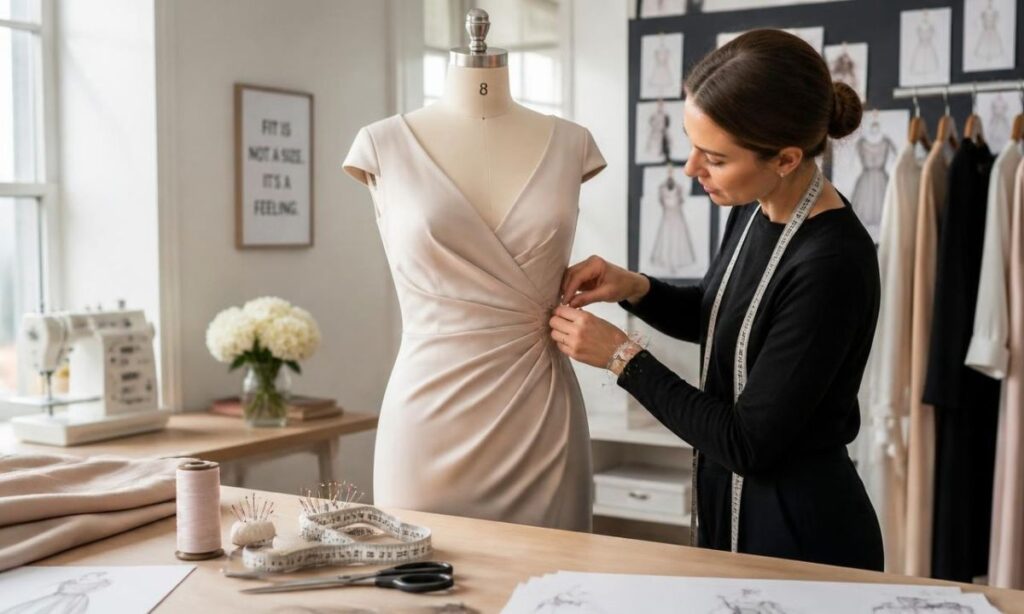
Sometimes the perfect dress isn’t perfect straight from the hanger. That’s where tailoring, sewing, and dress customization enter the picture.
A tailor may be able to make a dress smaller by adjusting side seams, adding darts, or changing other construction points. A garment with generous seam allowance may offer more possibilities.
Making a dress larger can be harder. Depending on the construction, a tailor might use extra fabric, matching fabric panels, or gussets. The available seam allowance determines what is realistically possible.
Ways to Adjust a Dress
Depending on its construction, a dress may be modified to:
- Take in a dress at the side seams
- Let out seams when extra fabric is available
- Adjust straps or shoulder placement
- Add a belt for waist definition
- Use temporary safety pins for minor adjustments
- Add fabric panels or gussets
- Change the hemline
- Modify closures or fastenings
For valuable formalwear, professional alteration is usually safer than experimenting with scissors five minutes before the event. That particular kind of confidence has ruined many perfectly innocent dresses.
How to Choose the Right Dress Size Online
Online dress shopping becomes much easier when you stop treating the size dropdown as the main source of truth.
Before clicking checkout, measure yourself and compare those numbers with the retailer’s online clothing size guide. Then read the product description for fabric composition, stretch, lining, and fit.
Look at customer reviews for comments about whether the dress runs large, runs small, or fits as expected. If the retailer provides garment measurements, compare them with an existing dress that fits you well.
A few extra minutes before checkout can save the unpleasant ritual of opening a package and realizing the dress appears to belong to someone from an entirely different universe.
How to Determine Dress Size by Measurements
If you’re wondering how to find your dress size, use this simple process:
- Take your bust measurement at the fullest point.
- Measure your waist at the narrowest or natural waistline.
- Measure your hips at their fullest point.
- Record your height when dress length matters.
- Check the specific brand’s dress size chart.
- Compare all three main measurements rather than just one.
- Consider the dress style and fabric.
- Check whether the retailer uses US, UK, European, or another sizing system.
A dress size calculator can make the comparison easier, but it should still be treated as an estimate. The manufacturer’s chart remains the most relevant reference.
Dress Sizes and Different Body Types
There is no single “correct” body shape for wearing a particular dress. A body type and dress size are separate ideas, and two people with identical measurements may prefer completely different silhouettes.
Someone may love a fitted dress, while another person prefers an oversized shape. One person may want a defined waist; another may feel most comfortable in a flowing maxi.
Instead of asking which dress size is “best,” ask which measurements need to be accommodated and what kind of fit feels comfortable.
That’s a much kinder way to approach dress size for different body types, and honestly, clothing shopping could use more of that attitude.
Why Dress Sizes Vary Between Brands
One of the biggest frustrations in women’s clothing is that size labels aren’t standardized across every brand.
Different clothing brands use different blocks, patterns, measurements, fabrics, and target fits. A designer may intentionally create a close-fitting silhouette, while another company may build additional ease into the same nominal size.
This explains why you can wear a 10 in one store and a 12 in another without your body having mysteriously changed overnight.
Dress size differences by brand are normal. Your measurements are more consistent than the label.
Practical Tips for Getting the Correct Dress Size
When you want a well-fitted dress, keep these habits in your shopping routine:
- Measure yourself periodically because measurements can naturally change.
- Use a flexible tape rather than a rigid ruler.
- Measure over lightweight clothing.
- Keep the tape level and comfortably snug.
- Check bust, waist, and hip measurements together.
- Read the brand’s sizing instructions.
- Pay attention to fabric stretch.
- Consider dress length and height.
- Read reviews when shopping online.
- Leave room in your budget for dress alteration when necessary.
A good size is the one that fits the garment’s intended cut and your measurements—not necessarily the smallest number you can squeeze into.
A Simple Clothing Size Guide for Everyday Shopping
If you want a quick clothing size guide, remember this principle: measure first, compare second, choose third.
The sequence matters. Starting with a size label can create unnecessary confusion, while starting with measurements gives you something concrete.
For everyday casual dresses, you may have more flexibility because relaxed fabrics and silhouettes can accommodate small differences. For formal dresses, fitted cocktail dresses, and structured gowns, accuracy becomes more important.
Your wardrobe should serve you, not the other way around. A number printed on a label doesn’t deserve the emotional authority we sometimes give it.
Frequently Asked Questions
How to Measure for the Right Dress Size
Measure your bust, waist, and hips accurately, then compare them with the brand’s dress size chart for the best fit.
How to Read a Dress Size Chart
A dress size chart helps you match your body measurements with the correct numerical or letter size used by a clothing brand.
How Do International Dress Sizes Compare?
US, UK, European, and other sizing systems can differ, so always check an international dress size conversion chart before buying.
How Should a Dress Fit?
A well-fitted dress should feel comfortable, allow easy movement, and sit smoothly around the bust, waist, and hips.
Conclusion
Finding the right dress doesn’t have to become a battle between you and a measuring tape. Once you understand dress measurements, brand sizing, international conversions, and the relationship between bust, waist, hips, and dress style, the process becomes much more straightforward.
The most reliable approach is simple: take accurate body measurements, use the retailer’s dress size chart, consider the fabric and silhouette, and remember that women’s dress sizes vary between brands.
Whether you’re choosing a party dress, formal gown, casual midi, petite style, or plus-size design, focus on fit rather than the number printed on the tag. A dress that moves comfortably, sits correctly, and makes you feel good in it has already done its job beautifully.
And if a nearly perfect dress needs a little tailoring, that’s not a failure of the dress or the wearer. Sometimes the final magic happens at the sewing table, where a few careful adjustments turn “almost right” into something that feels wonderfully yours.