A dinner plate seems like one of those things nobody really thinks about until it suddenly matters. You sit down at the dining table, place your food in the middle, and somehow the plate does its quiet job without asking for much attention. But once you start shopping for dinnerware, planning a wedding table, replacing old dishes, or trying to understand why one plate feels enormous while another feels tiny, the question becomes surprisingly useful: what size is a dinner plate?
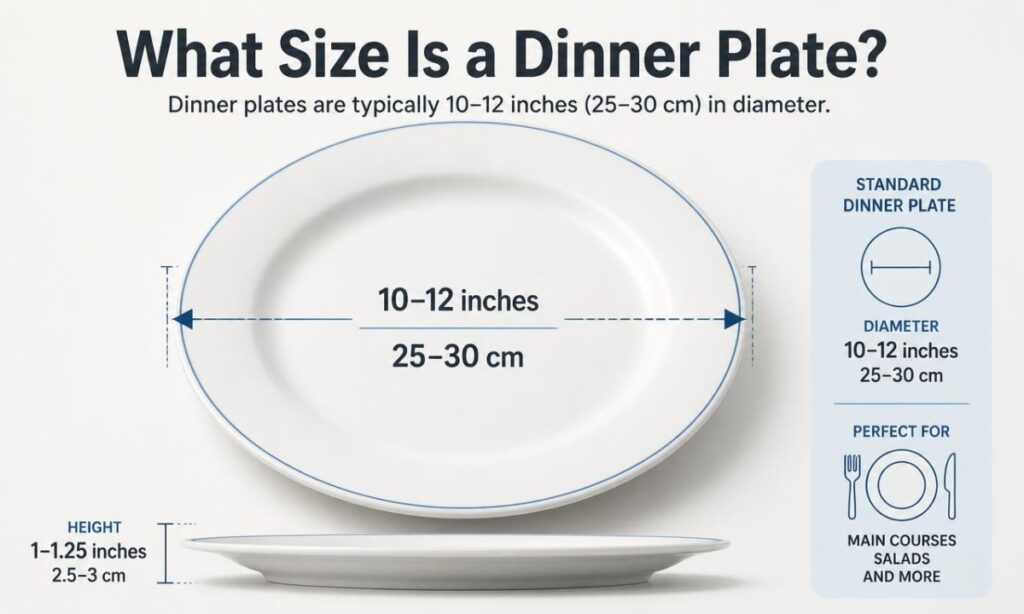
In most homes, a standard dinner plate measures around 10 to 12 inches (25.5 to 30.5 cm) in diameter. A 10-inch plate gives a more compact feel, while an 11- or 12-inch plate offers extra room for a generous main course, vegetables, sauces, and side dishes. There isn’t one universal measurement, though, and thats where things get interesting.
Plate dimensions can change according to the manufacturer, country, dining tradition, purpose, and even the style of the meal. A restaurant serving fine dining may use a broad plate with a smaller eating surface, while a family kitchen might prefer a practical ceramic plate that can hold almost anything. So, let’s unpack the world of dinner plate size without making it feel like a measuring exercise at school.
What Is the Standard Dinner Plate Size?
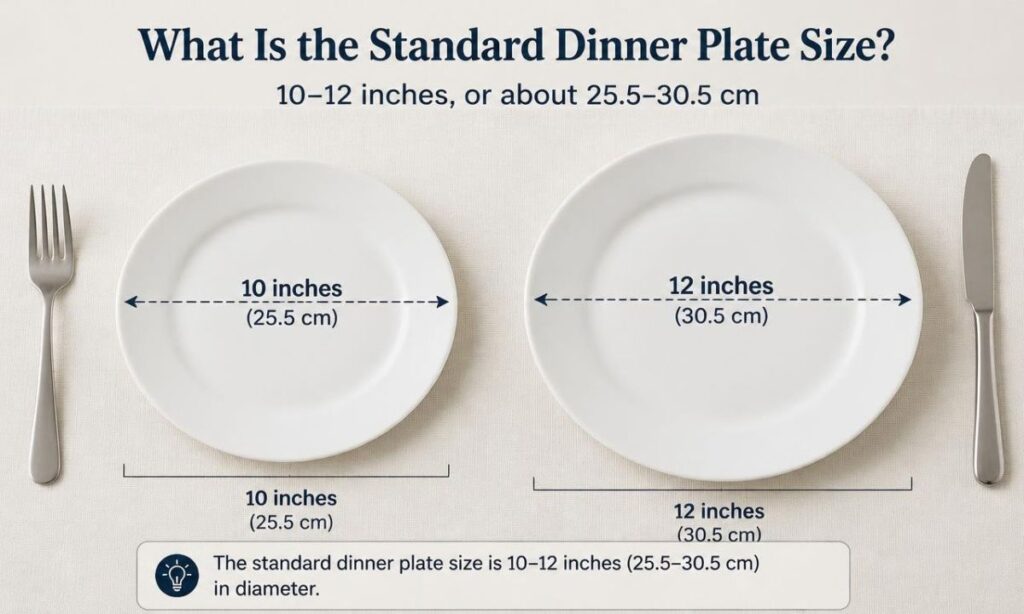
The most common standard dinner plate size is approximately 10–12 inches, or about 25.5–30.5 cm, across. The measurement normally refers to the plate’s diameter, taken straight across the widest point from one edge to the opposite edge.
A 10-inch dinner plate is often comfortable for ordinary meals, especially when portions are moderate. An 11-inch dinner plate gives a little more breathing room, while a 12-inch dinner plate can accommodate larger portions or meals with several components without everything bumping into everything else.
| Plate size | Approx. centimeters | Common use |
|---|---|---|
| 5–6 inches | 12.5–15 cm | Butter, small snacks, condiments |
| 6–8 inches | 15–20 cm | Bread, desserts, appetizers |
| 8–10 inches | 20–25 cm | Salads, lunch, lighter meals |
| 9 inches | 23 cm | Luncheon or compact meals |
| 10–12 inches | 25.5–30.5 cm | Standard dinner plates |
| 13 inches | 33 cm | Large serving or presentation plates |
The table is only a guide because plate measurements vary between manufacturers. A plate described as 11 inches might have a slightly different usable eating area depending on its rim, depth, and shape.
How Big Is a Standard Dinner Plate?
When someone asks, “how big is a dinner plate?” they are usually imagining a round plate sitting at an ordinary place setting. In practical terms, a standard plate is often roughly the width of a large book, a little smaller than a typical laptop screen, or approximately the span of two adult hands placed side by side.
The actual plate diameter is what matters most when comparing sizes. A 12-inch plate is about 30.5 cm wide, but its usable surface may be smaller if the plate has a wide decorative rim. That means two plates with the same outside measurement can hold noticeably different amounts of food.
For everyday use, a plate around 10–11 inches can feel nicely balanced. It leaves enough space for rice, meat, vegetables, bread, or a sandwich without making the table look crowded. A 12-inch model feels more generous and is especially handy when dinner involves several side dishes.
Dinner Plate Dimensions in Inches and Centimeters
Understanding dinner plate dimensions in inches is useful when you are buying plates online because photographs can be rather deceptive. A plate may look enormous on a website and surprisingly ordinary when it arrives at your doorstep.
A common dinner plate size in cm falls between approximately 25.5 and 30.5 cm. Here is a quick conversion guide:
- 10 inches = 25.4 cm
- 10.5 inches = 26.7 cm
- 11 inches = 27.9 cm
- 11.5 inches = 29.2 cm
- 12 inches = 30.5 cm
- 13 inches = 33 cm
The conversion is straightforward because 1 inch equals 2.54 centimeters. Still, remember that diameter is only one part of a plate’s physical dimensions. Thickness, rim width, shape, and depth can all affect how large the plate feels when you use it.
Why Dinner Plate Size Matters
It might seem a little excessive to care about a few inches of ceramic, but plate size influences both presentation and practicality. A tiny plate can make a normal serving look crowded, while a very large plate can make the same serving appear strangely lonely.
For everyday meals, a moderate-sized plate is generally convenient. Family dinners may include rice, vegetables, meat, bread, or several small dishes, so having enough room prevents the food from becoming one giant edible pile.
Plate size can also influence the visual balance of a table setting. Larger plates create a more substantial appearance, while smaller plates can make a setting feel lighter and more informal. Neither is automatically better; the right choice depends on the meal and the atmosphere you want.
Different Plate Sizes and Their Uses
Not every plate on a dining table is meant for a full dinner. Dinnerware sizes exist for a reason, and each type tends to have its own little role.
Lunch Plate or Luncheon Plate
A lunch plate or luncheon plate commonly falls somewhere around 8–10 inches. It works well for sandwiches, light meals, salads, or smaller portions where a full-sized dinner plate would feel excessive.
These plates are particularly useful for casual lunches and weeknight meals. They are also handy when you’re serving food buffet-style and want guests to have something manageable.
Bread and Butter Plate
A bread and butter plate is much smaller, often around 5–7 inches. It is designed for bread, rolls, butter, and other small accompaniments rather than a complete meal.
It may look almost comically small next to a dinner plate, but thats precisely the point. A warm roll sitting on a little plate has its own place instead of wandering around the main course.
Side Plate
A side plate can vary in size but is often around 6–8 inches. It may be used for bread, small snacks, fruit, or other foods served alongside the main meal.
In informal settings, the terms side plate and bread plate are sometimes used almost interchangeably, although formal table settings can give them more specific roles.
Appetizer Plate
An appetizer plate is usually smaller than a dinner plate and may measure roughly 6–8 inches. It is ideal for appetizers, hors d’oeuvres, finger foods, and bite-sized treats.
At a cocktail party or reception, several small plates can make it easier for guests to move around while eating rather than trying to balance a giant dinner plate in one hand.
Salad Plate
A salad plate commonly measures about 7–9 inches, although sizes vary. It gives fresh greens, vegetables, fruit, and smaller salads enough room without requiring the larger footprint of a dinner plate.
A salad plate can also double as a lunch plate in casual homes. Dinnerware doesn’t always follow strict rules, thankfully.
Dessert Plate
A dessert plate is generally around 6–8 inches and is made for cakes, pastries, pie, fruit, or other sweets. The smaller size helps create a neat presentation and keeps dessert portions visually distinct from the main course.
For a birthday party, afternoon tea, or casual gathering, these plates can be used for more than dessert too. Small sandwiches and snacks fit nicely on them.
Charger Plate
A charger plate or decorative underplate is usually larger than the dinner plate and may measure around 12–14 inches or more. It is often used as part of a formal table setting, sitting underneath another plate.
Chargers aren’t usually intended to be the main food-contact plate. Their purpose is partly decorative, helping establish an elegant dining atmosphere for weddings, banquets, receptions, and upscale dinner parties.
What Size Plate Is Best for Dinner?
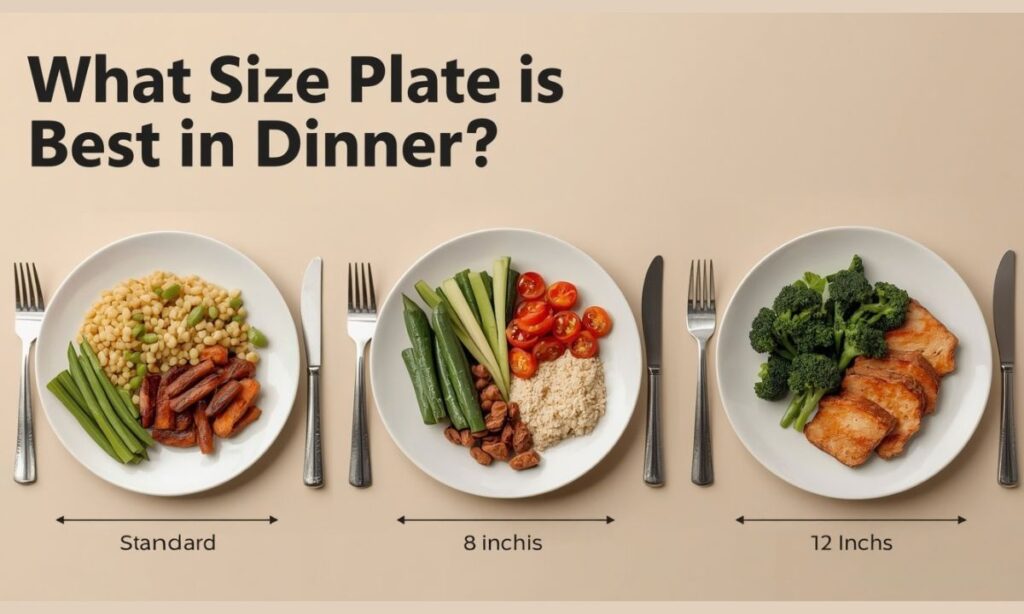
The best dinner plate size depends on how you actually eat rather than what a product label says. For many households, an 10–12 inch plate provides a practical middle ground.
If you serve generous meals with several components, an 11- or 12-inch plate can be comfortable. If you prefer lighter portions, an 8–10 inch plate may be enough. People who live in smaller homes may also prefer smaller plates because they take less cabinet and dishwasher space.
Consider these factors when choosing:
- Meal size: Larger meals generally need more surface area.
- Cabinet space: A 12-inch plate requires more storage room than a 9-inch plate.
- Dishwasher capacity: Oversized plates can be awkward in compact dishwashers.
- Table size: A small dining table can quickly feel crowded with oversized dinnerware.
- Food presentation: Broad plates provide more space for attractive plating.
- Daily habits: The plate you use every night should match your normal portions.
The perfect plate is less about chasing a magic number and more about finding the measurement that fits your kitchen and your meals.
Dinner Plate Size for Everyday Family Meals
For family dinners, practicality usually wins. A durable ceramic or porcelain plate around 10–11 inches can handle everything from pasta and roasted vegetables to rice dishes, grilled chicken, sandwiches, and leftovers.
Families with children may also keep smaller plates nearby. A large 12-inch plate can feel oversized for a young child, while a smaller 7–9 inch plate makes portions easier to manage.
For busy households, stackability is another overlooked detail. Two plates can have identical diameters but occupy very different amounts of cabinet space because of their shape and rim design. A low-profile plate can save room when you have a whole cupboard full of tableware.
Dinner Plates for Formal Dining and Special Occasions
Formal dining often introduces more types of plates than ordinary home meals. A meal may begin with an appetizer plate, move to a salad plate, and finish with a dessert plate, while a charger remains underneath during much of the meal.
The visual arrangement matters almost as much as the measurements. A large service plate can create a foundation for the place setting, while the actual dining plate sits above it.
At weddings, banquets, and formal receptions, plates may also be selected to coordinate with linens, glassware, cutlery, and decorative patterns. Here, aesthetic appeal becomes part of the culinary experience.
Fine dining restaurants sometimes use exceptionally broad plates with relatively small portions in the center. The extra white space isn’t an accident. It creates contrast and gives the chef room to arrange ingredients in a deliberate way.
Does Plate Shape Change the Size?
Yes, and this is where the simple idea of plate width becomes slightly tricky. A round plate has an obvious diameter, but square, oval, rectangular, and irregular plates don’t always communicate size in the same way.
A square plate measuring 11 inches across its widest points does not necessarily offer the same usable area as a round 11-inch plate. Corners, curved edges, raised rims, and deep wells can all change how much food comfortably fits.
The plate shape and size should therefore be considered together. Round plates remain popular because they are easy to stack and naturally fit traditional table settings, while modern restaurants often experiment with unusual shapes for creative presentation.
Plate Material and Size
The plate material can also influence how a plate feels in daily use. Ceramic plates are popular because they tend to be sturdy, versatile, and available in countless designs.
Porcelain is often associated with formal dining because of its refined appearance and relatively lightweight feel. Stoneware can have a heavier, rustic character, while melamine and other materials may be chosen for outdoor meals or settings where durability matters.
A beautiful plate isn’t automatically a practical plate, though. Before buying, consider weight, storage, washing requirements, and whether the material suits your household.
Choosing the Right Dinner Plate for Your Table

Choosing the right dining plate becomes easier when you start with the table rather than the plate itself. Measure the available space and think about how many items need to fit around each place setting.
A huge 12-inch plate may look impressive on a spacious dining table, but four of them can make a compact table feel packed. On the other hand, a small plate may leave too much empty space on a large formal table.
Think about the atmosphere too. Decorative dinner plates with bold patterns can become part of the room’s personality, while plain white ceramic plates create a clean background that lets colorful food stand out.
Your dinnerware should work with the food, the furniture, and the way people actually gather around the table. Thats a much better test than simply asking whether a plate looks fashionable.
A Simple Dinner Plate Size Guide
If you want a quick reference, this simplified plate size guide can help:
- 5–6 inches: butter, bread, small snacks, condiments
- 6–8 inches: desserts, appetizers, pastries, small portions
- 8–10 inches: salads, lunch, sandwiches, lighter meals
- 9 inches: compact luncheon or everyday portions
- 10–12 inches: standard dinner plates and main courses
- 12–14+ inches: chargers, presentation plates, and large serving pieces
These measurements are approximate rather than universal standards. Different brands and dining traditions may use slightly different dimensions.
How to Measure a Dinner Plate Correctly
Measuring a plate is wonderfully simple. Place a ruler or measuring tape across the widest part of the plate, passing through its center. Measure from one outer edge directly to the opposite edge.
For a round plate, this measurement is the diameter.
If the plate measures about 11 inches, its diameter is approximately 27.9 cm. If it measures 12 inches, it is about 30.5 cm. Don’t measure only the flat inner area, because product descriptions generally refer to the complete outside diameter.
For unusual shapes, record both the longest and widest measurements. That gives you a better idea of the actual space the plate will occupy on your dining table.
Read more : Standard Dinner Plate Size
Frequently Asked Questions
How many inches is a standard dinner plate?
A typical standard dinner plate is around 10–12 inches in diameter, although manufacturers may produce smaller or larger versions.
What is the average dinner plate size?
There isn’t one universal average, but many everyday dinner plates fall within the 10–12 inch range.
Is a 12-inch dinner plate too big?
Not necessarily. A 12-inch dinner plate is a common larger option and can be useful for generous meals, but it may take more cabinet and table space.
What size plate is best for dinner?
For many households, a 10–12 inch plate offers a useful balance between food capacity, presentation, storage, and table space.
What is the difference between a dinner plate and a salad plate?
A dinner plate is generally larger, often 10–12 inches, while a salad plate is commonly around 7–9 inches. Their exact sizes vary by dinnerware collection.
Conclusion
So, what size is a dinner plate? In most cases, you can expect a standard dinner plate to measure approximately 10–12 inches (25.5–30.5 cm) in diameter. That range is broad enough to accommodate everyday family meals, generous main courses, and attractive food presentation without becoming impractical.
Still, measurements only tell part of the story. The right plate depends on portion size, table space, storage, material, shape, and the kind of dining experience you want to create. A humble 10-inch ceramic plate may be perfect for a weeknight pasta dinner, while a beautifully designed 12-inch plate might feel right for a special gathering.
And perhaps thats the nicest thing about dinnerware: a plate isn’t merely a circle measured in inches. It becomes part of birthdays, quiet breakfasts, family conversations, celebrations, leftovers eaten standing in the kitchen, and those dinners where somebody says they’ll only have “a little” and somehow ends up with a mountain of food.
Choose a size that fits your life. The measurements matter, but the meals that happen on top of them matter quite a bit more.