Choosing the right plate might seem like a small detail, but it can change how a dessert looks, feels, and tastes at the table. Imagine serving a beautiful slice of chocolate cake on a plate so large that the dessert looks lost in the middle.
Now picture that same slice on a smaller plate, with a little space for chocolate sauce, fresh berries, and a delicate mint leaf. Suddenly, the presentation feels much more inviting.
That is where understanding the size of dessert plate becomes useful. Whether you’re setting the table for a family dinner, planning a wedding reception, or shopping for a new dinnerware collection, the right plate makes serving sweets easier and more attractive. And honestly, a good dessert deserves a little attention of its own.
Dessert plates come in different shapes, materials, and dimensions. Some are designed for a simple cookie or pastry, while others provide enough room for cake slices, puddings, fruit, and decorative toppings.
Although there is no single size used everywhere, most dessert plates measure approximately 8 to 10 inches in diameter, with smaller options available for individual treats.
In this guide, we’ll explore standard dessert plate dimensions, measurements in inches and centimeters, comparisons with other dining plates, and practical tips for choosing the right size for your needs.
What Is the Standard Size of a Dessert Plate?
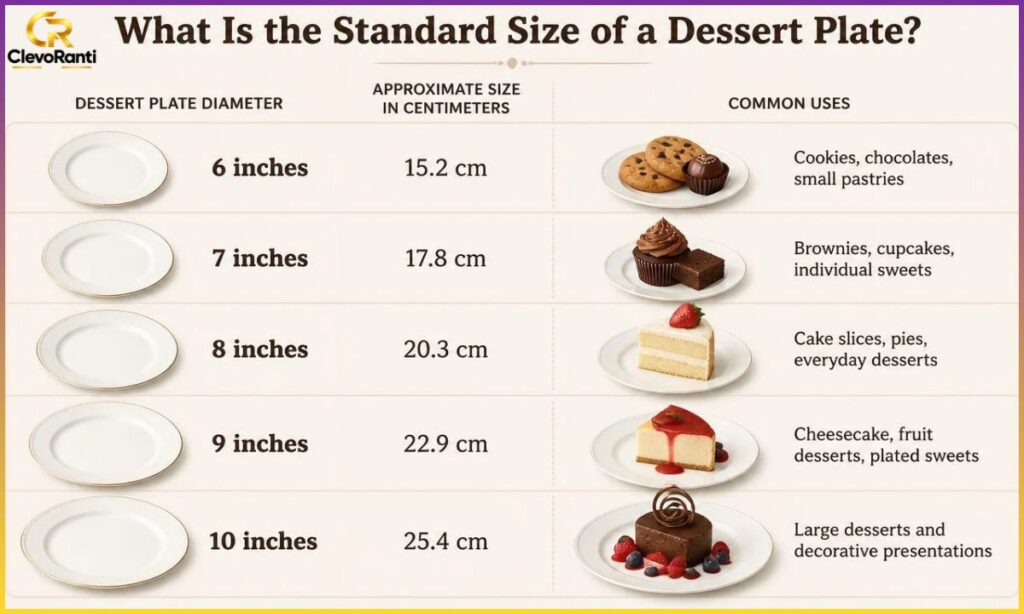
The standard dessert plate size is generally around 8 to 10 inches in diameter, which is approximately 20 to 25 centimeters. This range offers enough space for many common desserts without making individual portions look too small or overwhelming.
However, the exact dimensions depend on the manufacturer, the intended use, and the style of dinnerware. A plate designed for a small pastry may be considerably smaller than one used to serve a restaurant-style dessert with sauce and garnishes.
For everyday use, an 8-inch plate is often a practical choice. A 9-inch plate provides additional room, while a 10-inch plate works well for larger portions and more elaborate presentations.
Here is a quick overview:
| Dessert plate diameter | Approximate size in centimeters | Common uses |
|---|---|---|
| 6 inches | 15.2 cm | Cookies, chocolates, small pastries |
| 7 inches | 17.8 cm | Brownies, cupcakes, individual sweets |
| 8 inches | 20.3 cm | Cake slices, pies, everyday desserts |
| 9 inches | 22.9 cm | Cheesecake, fruit desserts, plated sweets |
| 10 inches | 25.4 cm | Large desserts and decorative presentations |
These measurements describe approximate plate diameters, not the size of the food itself. A wide rim or decorative border can also reduce the usable serving area.
Size of Dessert Plate in Inches and Centimeters
Understanding dessert plate dimensions in both measurement systems helps when buying dinnerware online or comparing products from different countries. A product listing might provide the diameter in inches, centimeters, or occasionally millimeters, so knowing the conversions makes the choice simpler.
The following measurements can serve as a handy reference.
| Plate size in inches | Diameter in centimeters | Diameter in millimeters |
|---|---|---|
| 5 inches | 12.7 cm | 127 mm |
| 6 inches | 15.24 cm | 152.4 mm |
| 7 inches | 17.78 cm | 177.8 mm |
| 8 inches | 20.32 cm | 203.2 mm |
| 9 inches | 22.86 cm | 228.6 mm |
| 10 inches | 25.4 cm | 254 mm |
To convert inches into centimeters, multiply the measurement by 2.54. For example, an 8-inch dessert plate measures 20.32 centimeters across.
It is also worth remembering that the diameter is measured straight across the plate through its center. It isn’t the circumference, which refers to the distance around the outer edge.
When shopping, check the listed dimensions carefully. Some sellers measure the widest part of a plate, including its rim, while others may emphasize the usable flat surface. That little difference can matter when you’re arranging several plates on a dining table.
Why Dessert Plate Size Matters
Plate size isn’t just about appearance. It influences portion presentation, convenience, table arrangements, and even how comfortable a meal feels.
A dessert plate that is too small may leave little room for a fork or decorative toppings. On the other hand, an oversized plate can make a modest serving appear smaller than intended. Finding a suitable middle ground helps food look appealing without requiring elaborate decoration.
There are a few practical reasons to consider the right plate dimensions.
- Better food presentation: A suitable plate creates a balanced appearance around cake slices, pastries, fruit, and other sweets.
- Comfortable serving: Enough surface area makes it easier to cut, lift, and eat dessert without spilling toppings.
- Appropriate portions: Smaller plates can help create neat individual servings, especially at parties or buffets.
- Consistent table settings: Matching plate sizes make the table look organized and thoughtfully arranged.
- Easy storage: Smaller plates generally require less cupboard space and are easier to stack.
For example, when serving cheesecake at a birthday gathering, an 8- or 9-inch plate usually gives enough space for the slice and a little fruit or sauce. A smaller 6-inch plate might be perfect for a single brownie, but it could feel crowded with a large piece of cake.
The best choice is the one that fits the food and the occasion rather than following a measurement simply because it is common.
Different Types of Plates Based on Size
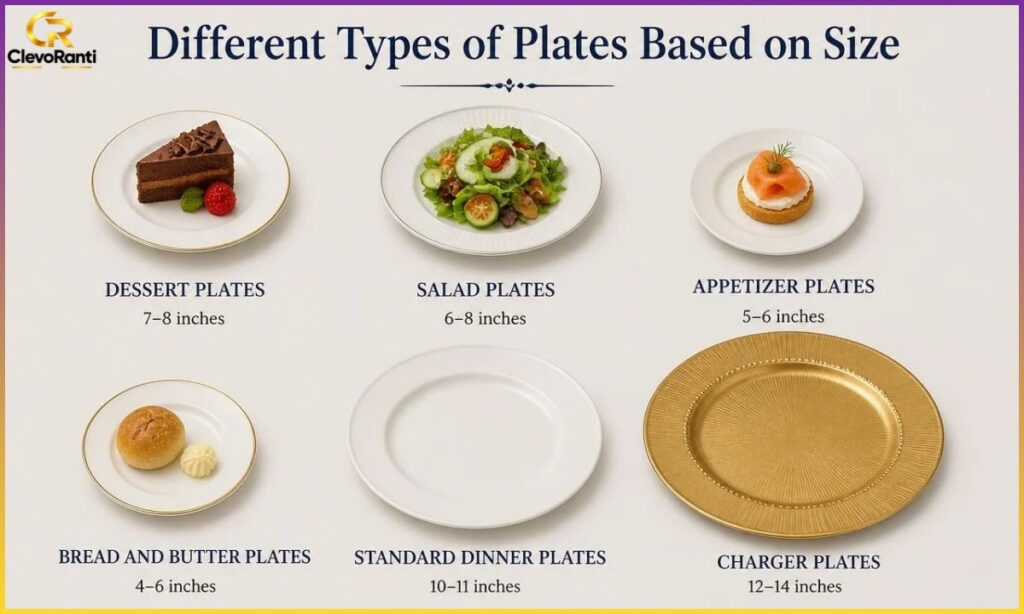
Dinnerware includes several plate styles, each created for a particular purpose. Their dimensions sometimes overlap, which explains why dessert plates, salad plates, and appetizer plates can look almost identical.
Understanding the differences helps you build a useful dinnerware collection without purchasing more plates than you actually need.
Dessert Plates
Dessert plates generally measure 8 to 10 inches across, although smaller versions are also common. They are designed for cakes, pies, pastries, puddings, fruit portions, and other sweet dishes.
Many households prefer 8-inch plates because they are versatile enough for everyday desserts. Decorative 9- or 10-inch designs may be more suitable for elaborate presentations at dinner parties.
Salad Plates
A salad plate commonly measures 8 to 10 inches in diameter. It provides room for fresh greens, chopped vegetables, fruit salads, and smaller side portions.
Because salad plates and dessert plates often share similar dimensions, they can frequently be used for both purposes. The main difference is usually the intended serving style rather than a strict measurement rule.
Appetizer Plates
Appetizer plates generally measure around 6 to 8 inches across. They work well for finger foods, small sandwiches, cheese portions, hors d’oeuvres, and bite-sized snacks.
At a cocktail party, these plates are convenient because guests can hold them comfortably while standing and talking.
Bread and Butter Plates
Bread and butter plates are usually among the smaller pieces in a dinnerware collection, often measuring 5 to 6 inches across.
They are intended for bread rolls, toast, crackers, and butter portions. Their compact size makes them useful in formal dining arrangements where each course has a designated plate.
Standard Dinner Plates
A standard dinner plate generally measures 10 to 12 inches in diameter. These plates provide sufficient space for main courses, vegetables, side dishes, and sauces.
Compared with a dessert plate, a dinner plate usually offers a larger surface area and a broader serving space. Using one for a small dessert is possible, of course, but it may not give the same balanced presentation.
Charger Plates
Charger plates, sometimes called service plates or underplates, commonly measure around 12 to 14 inches across, although some designs fall outside this range.
They are primarily decorative and are placed beneath dinner plates during certain formal meals. They help establish an elegant table setting but are not normally intended to serve food directly unless the product is specifically designed for that purpose.
Dessert Plate vs. Salad Plate: What Is the Difference?
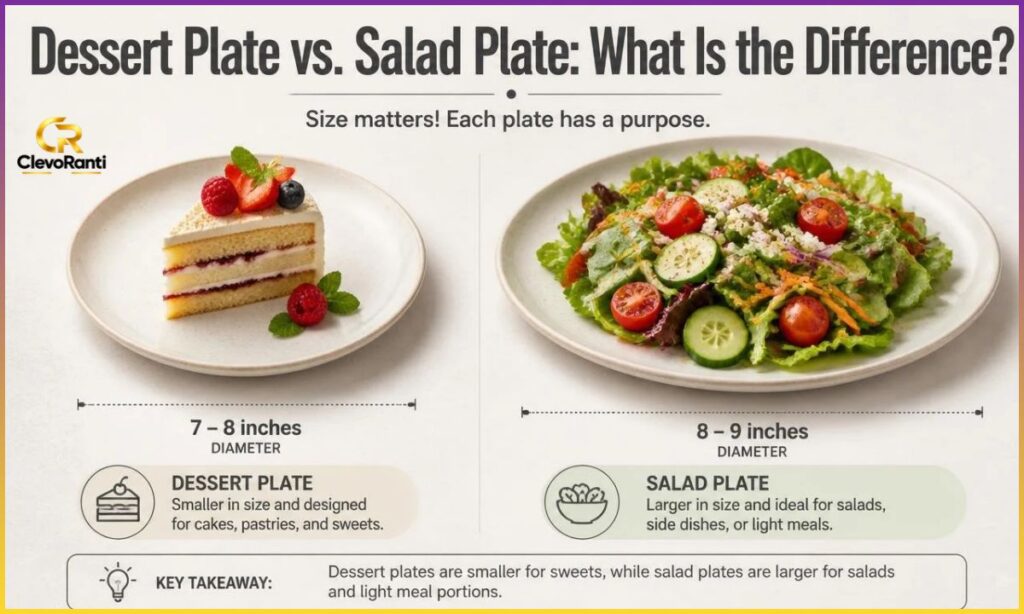
The difference between a dessert plate and a salad plate can be surprisingly small. Both are often around 8 to 10 inches wide, and many designs are interchangeable.
The distinction usually comes down to how the plates are used, their shape, and the dinnerware collection they belong to.
A dessert plate might have a delicate floral pattern, a narrow rim, or a design that complements cakes and pastries. A salad plate may feature a wider surface area or a pattern coordinated with dinner plates.
Neither style has a universally fixed diameter.
Consider this simple comparison:
| Feature | Dessert plate | Salad plate |
|---|---|---|
| Typical diameter | 8–10 inches | 8–10 inches |
| Main purpose | Cakes, sweets, pastries | Salads, vegetables, light portions |
| Common materials | Porcelain, ceramic, glass | Porcelain, ceramic, glass |
| Typical presentation | Individual sweet portions | Greens and side dishes |
| Interchangeability | Often suitable for salads | Often suitable for desserts |
If you’re buying dinnerware for a small kitchen, choosing a matching 8- or 9-inch plate that serves both purposes is a sensible option. You won’t need separate sets for every meal, and your cupboards will stay a little less crowded.
What Size Dessert Plate Is Best for Cake and Pastries?
The ideal plate size depends on the dessert being served. A delicate pastry needs less space than a generous slice of layered cake, and a plated restaurant dessert may require room for sauces or decorative elements.
For most home settings, an 8-inch dessert plate is a reliable starting point. It offers a comfortable balance between serving area and portion size.
Here are some useful guidelines.
- Cake slices: An 8- to 9-inch plate works well for most individual cake portions.
- Cheesecake: An 8- to 10-inch plate provides space for a slice and optional fruit or sauce.
- Cupcakes and muffins: A 6- to 8-inch plate is usually sufficient for one or two items.
- Cookies and brownies: A 6- to 8-inch plate is practical for individual servings or a small selection.
- Fruit desserts: An 8- to 9-inch plate provides room for sliced fruit and small accompaniments.
- Pastries: A 7- to 9-inch plate suits many croissants, danishes, and similar treats.
- Restaurant-style desserts: A 9- to 10-inch plate can provide more room for artistic food arrangement.
These are practical recommendations rather than strict standards. A tall slice of cake might need more space than a thin pastry, even if both are served individually.
When choosing a plate, consider not only the diameter but also the rim, depth, and shape. A shallow plate is suitable for dry pastries, while a slightly deeper dish may be more convenient for pudding, fruit with syrup, or desserts served with custard.
Plate Size Chart: Comparing Common Dinnerware Dimensions
A plate size chart makes it easier to understand where dessert plates fit into a complete dinnerware collection. The following ranges are approximate and may vary according to regional traditions, manufacturers, and design choices.
| Plate type | Approximate diameter | Common use |
|---|---|---|
| Bread and butter plate | 5–6 inches | Bread, butter, crackers |
| Small dessert plate | 6–8 inches | Cookies, brownies, small sweets |
| Appetizer plate | 6–8 inches | Finger foods and starters |
| Dessert plate | 8–10 inches | Cakes, pies, pastries |
| Salad plate | 8–10 inches | Salads and side dishes |
| Lunch plate | Around 9 inches | Light meals and sandwiches |
| Dinner plate | 10–12 inches | Main courses |
| Charger plate | 12–14 inches | Decorative formal place settings |
The categories overlap because plate naming conventions aren’t universal. A manufacturer might call an 8-inch product a salad plate, while another sells a similar item as a dessert plate.
When comparing products, rely on the stated dimensions and the actual shape rather than the product name alone. That approach is especially helpful when ordering online, where photographs can make a small plate appear larger than it is.
Choosing the Right Dessert Plate for Different Occasions

A plate that works beautifully for a quiet evening at home may not be the best option for a large celebration. Different occasions call for different combinations of size, durability, and appearance.
Everyday Family Meals
For regular family use, 8-inch dessert plates are a practical choice. They can handle slices of cake, fruit, biscuits, and small snacks without taking up too much cupboard space.
Durable ceramic or dishwasher-safe porcelain may be preferable when plates are used frequently. A simple design also makes it easier to mix and match the rest of your tableware.
Dinner Parties and Formal Dining
For a more formal setting, 8- to 10-inch dessert plates provide enough space for carefully arranged sweets. White porcelain can make colorful desserts stand out, while decorative rims can add a more traditional appearance.
During a multi-course meal, matching the dessert plates to the dinnerware collection creates a cohesive table setting. You can still use a contrasting design when you want the final course to feel special.
Weddings and Celebrations
Wedding receptions, birthdays, and anniversary dinners often involve several desserts served in different portions. A collection of 7- to 9-inch plates can accommodate many cakes, pastries, and individual sweets.
For buffet service, smaller plates may help guests sample several options without taking oversized portions. It’s also wise to choose durable pieces if the plates will be handled repeatedly throughout the event.
Cafés and Restaurants
Restaurants may use different plate sizes depending on the menu and presentation style. A café serving a simple brownie might prefer a compact plate, while a restaurant featuring a carefully arranged dessert could choose a larger one.
The plate should support the food rather than compete with it. Its rim, color, and shape should make the dessert easy to appreciate and eat.
Materials, Shapes, and Designs to Consider
Diameter is important, but it isn’t the only factor that determines whether a dessert plate is suitable. Material, shape, weight, and surface design all affect the dining experience.
Ceramic and Porcelain Plates
Ceramic plates are widely used because they come in many styles, colors, and price ranges. Porcelain is often chosen for its smooth finish and refined appearance, making it suitable for both everyday dining and formal occasions.
Both materials are available in common dessert plate sizes, so you can select a suitable diameter without sacrificing the look you prefer.
Glass Plates
Glass dessert plates can create a light, elegant appearance. Clear glass works particularly well for colorful pastries and fruit desserts because it doesn’t distract from the food.
However, glass plates vary in thickness and durability, so check whether a particular product is suitable for frequent use and dishwasher cleaning.
Melamine Plates
Melamine plates are lightweight and often useful for outdoor meals, picnics, and casual gatherings. They are available in many sizes and designs.
Check the manufacturer’s care instructions before purchasing. Melamine products are generally not intended for microwave use unless the manufacturer explicitly states otherwise.
Round, Square, and Oval Plates
Round plates are the traditional choice for dessert serving, but square and oval options can create a more contemporary presentation.
A square 8-inch plate may have a different usable surface area from a round plate of the same nominal width. Likewise, raised rims and curved edges can affect how much room is available for food.
If you prefer an unusual shape, consider the actual serving area rather than comparing the outside dimensions alone.
How to Choose the Right Dessert Plate Size
Selecting the best dessert plate becomes much easier when you consider your menu, storage space, and dining habits before buying.
Start by identifying the desserts you serve most often. If your family regularly enjoys cake, pie, and pastries, an 8- or 9-inch plate is a useful everyday option. If you mostly serve chocolates, cookies, or small portions, a smaller plate may be more convenient.
Next, think about how you store your dinnerware. A set of large plates can take up considerable cabinet space, particularly if the plates have wide rims or unusual shapes.
A few additional considerations can help you make a better choice:
- Serving purpose: Choose the diameter according to the typical portion and accompanying toppings.
- Available storage: Measure your cupboard shelves before buying a large dinnerware set.
- Table size: Make sure the plates fit comfortably alongside glasses, cutlery, and other serving dishes.
- Durability: Select materials suited to your household’s daily use.
- Cleaning requirements: Check dishwasher and microwave compatibility where relevant.
- Design consistency: Choose colors and patterns that complement your existing dinnerware.
- Quantity: For entertaining, consider how many guests you normally serve and whether you need a few extra plates.
It can also be useful to buy one sample plate before purchasing a full set. Place a typical slice of cake or pastry on it and see whether the proportions feel right. A quick real-world test can tell you more than a product photograph.
Common Mistakes When Buying Dessert Plates
Even a simple purchase can become frustrating if you overlook a few details. One common mistake is assuming every dessert plate follows the same standard size. In reality, manufacturers use different names and dimensions, so the label alone isn’t enough.
Another mistake is focusing entirely on appearance. A beautiful plate may have a narrow flat surface or a wide rim that leaves little room for food. Consider how it will function, not just how it looks on a shelf.
Some buyers also choose plates that are too large for their usual portions. While larger plates can look elegant, they may take up extra storage space and make small servings appear less substantial.
Finally, don’t forget to check the care instructions. A decorative plate may require handwashing, while a practical everyday set might be designed for dishwasher use. These small details can make a real difference over time.
Explore More Blog : Flag Size Chart
Frequently Asked Questions
What is the standard size of a dessert plate in inches?
A typical dessert plate measures approximately 8 to 10 inches in diameter. Smaller plates around 6 to 8 inches are also common for individual pastries, cookies, and compact dessert portions.
How many centimeters is an 8-inch dessert plate?
An 8-inch dessert plate measures approximately 20.32 centimeters in diameter. This is a popular size for serving individual slices of cake, brownies, and similar treats.
Are dessert plates smaller than dinner plates?
Generally, yes. Dessert plates commonly measure 8 to 10 inches, whereas standard dinner plates often measure 10 to 12 inches. However, the ranges overlap depending on the manufacturer and design.
Can I use a salad plate as a dessert plate?
Yes. Salad plates and dessert plates frequently share similar dimensions, so they can often be used interchangeably. Check the usable surface area and design to ensure the plate suits the dessert.
Is a 6-inch plate suitable for dessert?
A 6-inch plate works well for small portions such as cookies, brownies, chocolates, and compact pastries. For a large cake slice or a dessert with several toppings, an 8-inch plate may be more comfortable.
What is the best dessert plate size for formal dining?
An 8- to 10-inch plate is generally a good choice for formal dining. The ideal size depends on the dessert, the presentation style, and the dimensions of the other dinnerware in the place setting.
What is the difference between a dessert plate and an appetizer plate?
Dessert plates often measure 8 to 10 inches, while appetizer plates commonly measure 6 to 8 inches. These ranges overlap, and the main distinction is usually the intended serving purpose.
Conclusion
Understanding the size of dessert plate helps you choose dinnerware that is practical, attractive, and suitable for the food you love serving. Although an 8- to 10-inch diameter is common for dessert plates, smaller 6- to 8-inch options work beautifully for modest portions and bite-sized treats.
The right choice depends on more than a number. Consider the type of dessert, the available serving area, your storage space, and whether you need plates for everyday family meals or special gatherings. Remember that dessert plates and salad plates often share similar dimensions, so a versatile set can serve several purposes.
A thoughtful plate doesn’t need to be expensive or elaborate. Sometimes, a simple plate with the right proportions makes a homemade slice of cake feel like a little celebration.
If you’re shopping for new dinnerware, start with a size that suits your usual desserts and build from there. And if you have a favorite plate size or a useful tip for serving sweets, share your experience in the comments. Someone else planning their next dinner party might find exactly the advice they needed.