
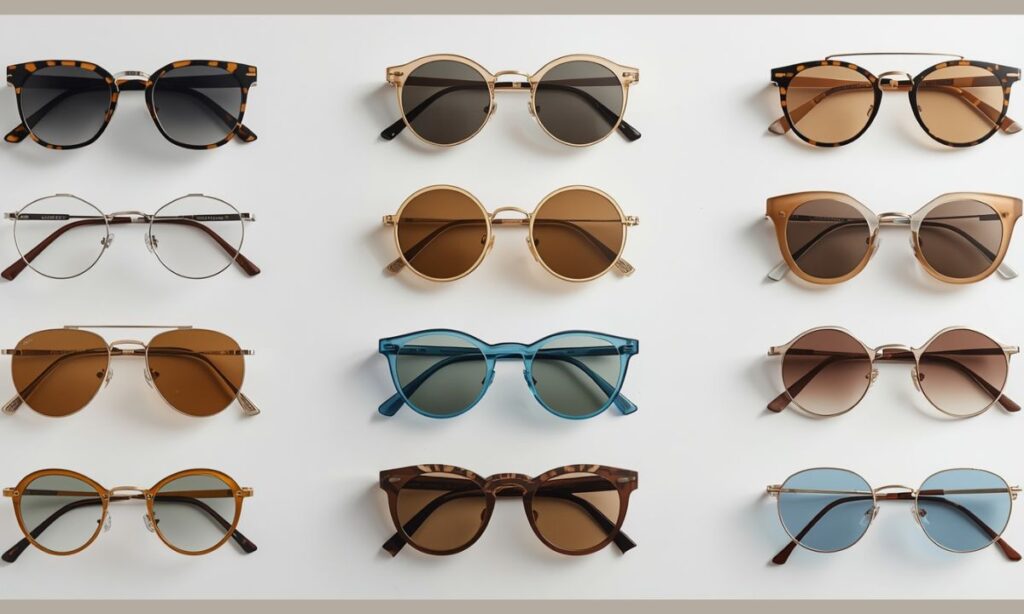
Sunglasses are one of those accessories that can quietly transform an entire outfit. A simple T-shirt and jeans can look polished with the right frames, while a summer dress or formal outfit can gain a completely different personality with a stylish pair of shades. But sunglasses are not just about looking good. They also help protect your eyes from harmful ultraviolet (UV) rays, reduce uncomfortable glare, and make spending time outdoors more enjoyable.
With so many styles of sunglasses available, finding the right pair can feel a little confusing. Aviators have a timeless appeal, cat-eye frames bring a vintage touch, and oversized sunglasses make a bold fashion statement. Then there are sporty wraparound designs, modern shield frames, and geometric shapes for anyone who likes something different.
The interesting part is that the best pair is not always the trendiest one. Your face shape, personal style, daily activities, and preferred frame materials all play a role in choosing sunglasses that feel right. Some people love classic designs they can wear for years, while others enjoy experimenting with fresh colors and unusual lens shapes.
In this guide, we’ll explore the different types of sunglasses, explain which frames may complement various face shapes, and share practical tips for choosing fashionable eyewear without overlooking eye protection.
Why Are There So Many Different Styles of Sunglasses?
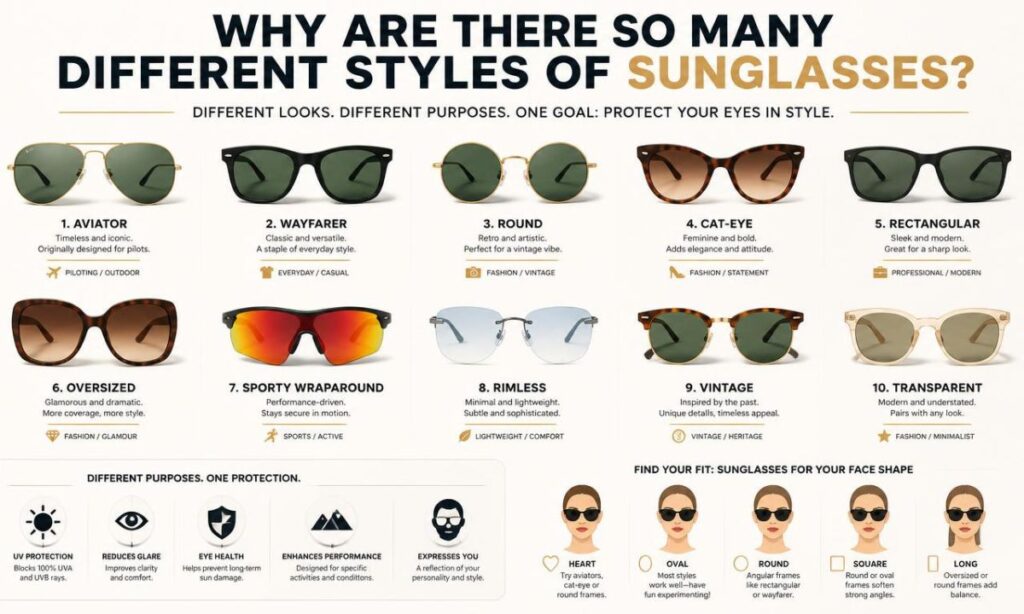
Sunglasses have developed from practical sun shields into everyday fashion accessories. Today, they come in countless shapes, colors, materials, and designs, giving everyone an opportunity to find something that suits their personality.
Some frames are inspired by vintage fashion, while others are designed for sports, driving, or outdoor adventures. Certain designs emphasize sharp facial angles, and others create a softer appearance. The differences might seem small at first, but the right frame can change how your overall look comes together.
When exploring popular sunglasses styles, consider three main factors:
- Fashion: Classic, retro, contemporary, minimalist, or bold statement frames.
- Function: UV protection, polarized lenses, glare reduction, and comfortable coverage.
- Fit: Frame width, bridge size, temple length, and compatibility with your facial proportions.
You don’t need to follow every fashion trend to find sunglasses you love. Sometimes the pair you reach for every morning becomes your signature accessory simply because it feels comfortable and looks like you.
1. Aviator Sunglasses: A Timeless Classic
Aviator sunglasses are recognized by their teardrop-shaped lenses, thin metal frames, and frequently a double bridge connecting the upper rims. Originally associated with pilots, this design eventually became a staple of everyday fashion.
Their lightweight appearance makes them easy to pair with casual clothing, smart outfits, and summer essentials. Gold, silver, black, and gunmetal frames remain popular choices, although modern versions also feature colorful lenses and updated proportions.
Why people love aviators:
- Their classic shape works with many clothing styles.
- Thin metal frames create a relatively lightweight appearance.
- They are available in numerous lens colors and sizes.
- They offer a recognizable look without requiring elaborate styling.
- Different variations suit both understated and adventurous fashion preferences.
Aviators are often recommended for square, oval, and heart-shaped faces because their curved lenses can soften stronger angles or complement a wider forehead. However, fit matters more than following a strict rule.
If you prefer a versatile accessory that feels equally appropriate on a road trip, at a café, or during a weekend outing, aviators are worth trying.
2. Navigator Sunglasses: Structured and Sophisticated
Navigator sunglasses resemble aviators but generally feature squarer or more geometric lenses. Their structured shape creates a slightly more defined appearance, making them an interesting option for people who want a classic design with a contemporary edge.
Metal rims, angular corners, and double-bridge details are common features. Some versions have a subtle, professional appearance, while others use thicker frames for a more noticeable fashion statement.
Key features of navigator sunglasses include:
- Square, rectangular, or geometric lens shapes.
- Metal frames with clean, defined lines.
- A structured appearance suitable for casual and smart-casual outfits.
- Designs that range from understated to bold.
- Variations that can complement oval and round face shapes.
For round faces, angular navigator frames may introduce visual definition. On oval faces, they can create a balanced, polished look.
Navigator sunglasses are a useful choice if traditional aviators feel a little too curved for your taste. They keep some of the familiar character while offering a sharper silhouette.
3. Wayfarer Sunglasses: Everyday Style With Personality
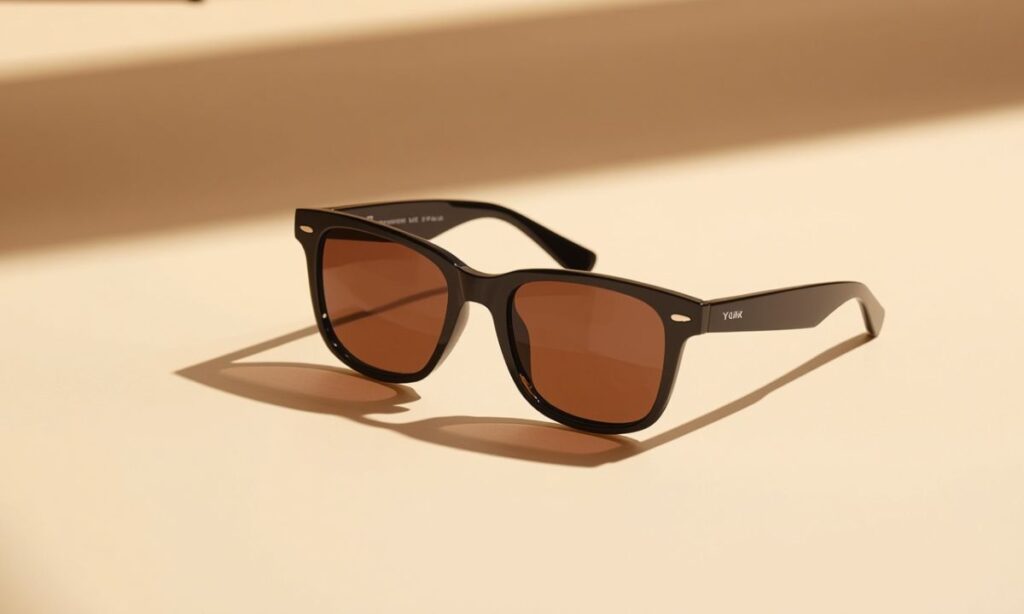
Wayfarer sunglasses are known for their distinctive trapezoidal shape, bold upper rims, and often thick plastic frames. They became a recognizable part of modern eyewear culture because they are easy to style and have a strong visual identity.
Traditional black Wayfarers remain a classic option, but today’s designs include tortoiseshell patterns, transparent acetate, colored frames, and different lens sizes.
What makes Wayfarers appealing?
- Their recognizable shape works with casual clothing.
- Thick frames create a defined appearance.
- They are available in classic and contemporary variations.
- Many designs are suitable for different genders and personal styles.
- They can complement round, oval, and some heart-shaped faces.
For someone who doesn’t want to own five different pairs of sunglasses, Wayfarers can be a practical starting point. A neutral frame can work with jeans, summer dresses, button-down shirts, and travel outfits without looking out of place.
They may also suit round faces by introducing angular lines, while the balanced proportions of an oval face can accommodate many Wayfarer designs.
4. Round Sunglasses: Retro Charm and Creative Expression
Round sunglasses feature circular or nearly circular lenses that bring a vintage-inspired character to modern outfits. They have appeared in different eras of fashion, from artistic and bohemian looks to minimalist contemporary styling.
The frames can be made from thin metal, acetate, or a combination of materials. Small round lenses offer a subtle retro appearance, while larger versions create a more noticeable statement.
Reasons to consider round sunglasses:
- They introduce softer curves to an outfit.
- Metal versions can look delicate and understated.
- Larger frames can feel expressive and fashion-forward.
- They work well with vintage, artistic, and casual clothing.
- Different frame sizes provide options for various facial proportions.
Round sunglasses are often suggested for square and rectangular faces because their curves can soften angular features. They may also suit diamond-shaped faces, depending on the width and placement of the frames.
If you have a round face, you can still wear round sunglasses. Try different sizes and proportions instead of assuming a particular shape is off-limits.
The best style is the one that makes you feel comfortable wearing it, not one that follows every traditional fashion guideline.
5. Rectangular Sunglasses: Clean Lines and Modern Appeal
Rectangular sunglasses feature horizontal lenses with relatively straight edges. Their clean geometry gives them a streamlined appearance that works well with modern, minimalist, and professional wardrobes.
Some designs use narrow lenses for a subtle retro feel, while others have wider frames and thicker rims that create a bolder effect.
Popular rectangular sunglasses features include:
- Straight upper edges and defined corners.
- Slim or medium-width lens proportions.
- Plastic, acetate, and metal frame options.
- Neutral colors such as black, brown, and tortoiseshell.
- Contemporary designs suitable for everyday use.
Rectangular frames are often recommended for round faces because their angular lines can create contrast with softer facial curves. They may also complement oval faces, depending on frame width.
For longer rectangular faces, wider or taller lenses may create a more balanced appearance than extremely narrow frames. The aim isn’t to hide your natural features; it’s to choose proportions that feel harmonious.
These frames are especially useful if you like accessories that look polished without attracting too much attention.
6. Cat-Eye Sunglasses: Vintage Glamour With a Modern Twist
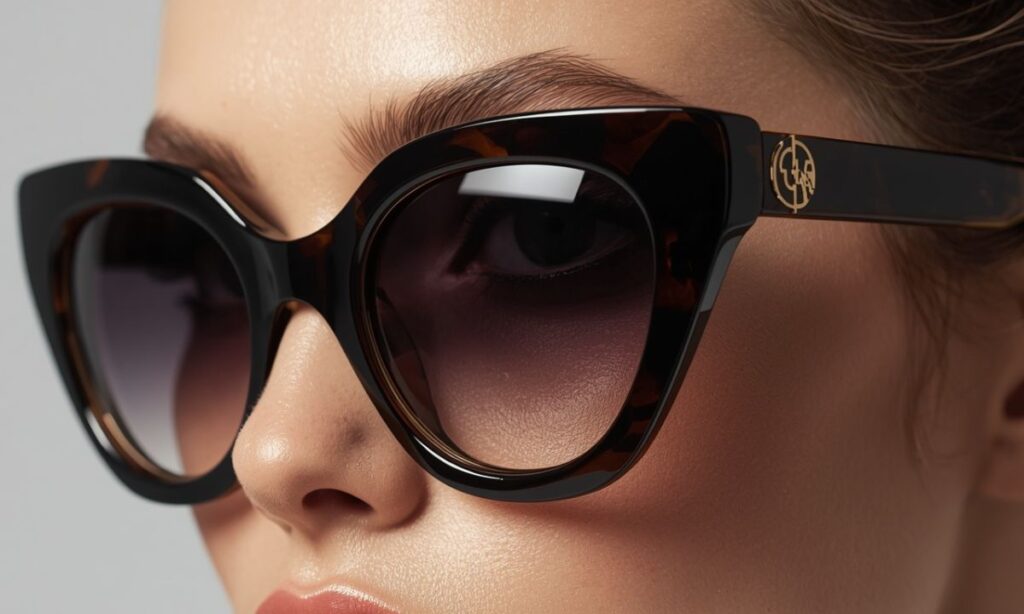
Cat-eye sunglasses have upswept outer corners that resemble the shape of a cat’s eyes. Their distinctive outline became associated with vintage glamour and remains popular in both classic and contemporary eyewear collections.
Traditional cat-eye frames can be delicate and feminine, while modern interpretations may feature exaggerated corners, colorful acetate, or geometric details.
Why cat-eye sunglasses stand out:
- Upswept corners create a distinctive silhouette.
- They bring a vintage-inspired touch to everyday outfits.
- Available designs range from subtle to dramatic.
- They can draw attention toward the upper face.
- They pair well with dresses, tailored clothing, and casual looks.
Cat-eye frames are often suggested for round and square faces because the lifted corners can introduce contrast or soften the appearance of strong angles. They may also complement heart-shaped faces, especially when the frame width works with the forehead and cheekbones.
For everyday wear, a modest cat-eye design in black or tortoiseshell can be versatile. If you’re dressing for a party or special event, a more exaggerated frame can become the centerpiece of your outfit.
7. Oversized Sunglasses: Bold Frames and Extra Coverage
Oversized sunglasses have large lenses and frames that occupy a noticeable portion of the face. They are associated with dramatic fashion, celebrity-inspired styling, and a glamorous approach to everyday accessories.
Despite their bold appearance, oversized frames are available in many styles, including square, round, butterfly, and cat-eye designs.
Benefits and features of oversized sunglasses:
- Large lenses provide substantial visual coverage.
- Bold frames can become a central fashion accessory.
- Multiple shapes accommodate different personal preferences.
- Some designs offer useful protection from light entering around the sides.
- They work with both casual and dressed-up outfits.
Oversized sunglasses can complement oval, diamond-shaped, and heart-shaped faces, depending on their dimensions. Wider frames may balance prominent cheekbones, while rounded oversized lenses can soften angular features.
However, bigger does not automatically mean better eye protection. Look for sunglasses that provide verified UV protection and fit securely without slipping, touching your cheeks, or obstructing your vision.
If you enjoy dramatic accessories, oversized sunglasses offer plenty of room for personal expression.
8. Square Sunglasses: Strong Shapes and Defined Features
Square sunglasses have angular corners, relatively straight sides, and a structured frame shape. They can appear bold and contemporary, particularly when paired with thick black or tortoiseshell rims.
Smaller square frames may feel understated, while larger versions can create a strong fashion statement.
What makes square sunglasses distinctive?
- Angular geometry and clear outlines.
- A defined appearance that contrasts with rounded features.
- Options in plastic, acetate, and metal.
- Designs suitable for casual and smart-casual outfits.
- Classic and modern interpretations in many colors.
Square sunglasses are frequently recommended for round and oval faces. Their straight lines can create contrast with round facial contours, while oval faces can accommodate many frame shapes.
For square faces, rounder or oval lenses may provide a softer contrast, but square frames are still an option if you enjoy emphasizing angular features.
Fashion advice should be a guide, not a restriction. You can use your sunglasses to complement your face shape or deliberately create a more dramatic look.
9. Wraparound Sunglasses: Practical Coverage for Active Days
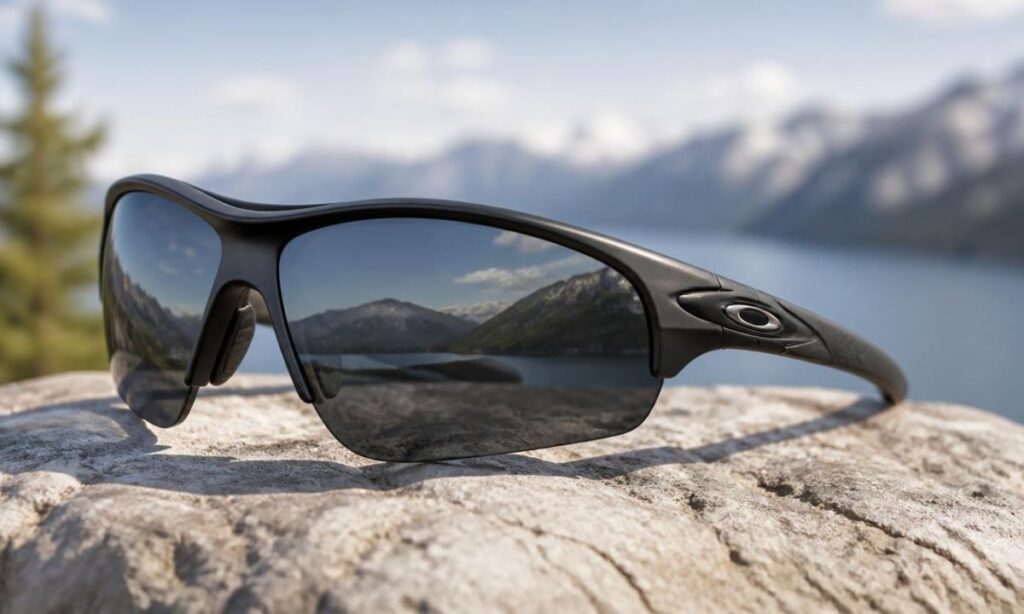
Wraparound sunglasses curve around the sides of the face rather than sitting entirely flat across the front. This design can help reduce light entering from the sides and is popular for cycling, running, hiking, fishing, and other outdoor activities.
Their appearance is usually sporty, although some contemporary designs are suitable for everyday casual wear.
Important features of wraparound sunglasses include:
- Curved frames that follow the face.
- Greater side coverage than many conventional frames.
- Lightweight construction in many sports models.
- Secure-fitting designs intended for movement.
- Lens options designed for specific outdoor conditions.
Wraparound frames are particularly useful when peripheral light, wind, or airborne debris could become uncomfortable. However, their protective performance varies by model, so check the intended use and lens specifications.
For cycling or running, choose a pair that stays in place during movement and provides a sufficiently wide field of vision. A comfortable nose bridge and secure temples can make a big difference during longer activities.
These sunglasses demonstrate that good eyewear can be both functional and stylish.
10. Browline Sunglasses: A Retro-Inspired Design
Browline sunglasses feature a prominent upper rim that emphasizes the brow area, often paired with thinner lower rims. The contrasting construction creates a distinctive shape that feels vintage without necessarily looking old-fashioned.
They are sometimes confused with Clubmaster sunglasses, which are a well-known browline-style design associated with the Ray-Ban brand.
Reasons to try browline sunglasses:
- The bold upper frame draws attention to the eyes.
- Contrasting rims create a recognizable appearance.
- They work with vintage and contemporary wardrobes.
- Metal and acetate combinations offer different visual effects.
- Their structured design can look polished with smart-casual outfits.
Browline frames are often suggested for oval, diamond-shaped, and heart-shaped faces, depending on their width and the proportions of the upper face.
They can be a good choice if you enjoy a slightly intellectual, retro-inspired aesthetic without wanting an entirely round or oversized frame.
11. Clubmaster Sunglasses: Classic Style With Character
Clubmaster sunglasses are a recognizable browline-inspired design commonly associated with Ray-Ban. Their contrasting upper rims, thinner lower frame, and vintage-modern appearance have helped make them a lasting eyewear option.
Although Clubmaster designs are often associated with retro fashion, they can work just as naturally with modern clothing.
Their defining characteristics include:
- Bold upper rims and relatively slim lower rims.
- A structured silhouette with vintage influence.
- Common combinations of dark acetate and metal.
- Classic black, brown, and tortoiseshell finishes.
- A style that suits casual, professional, and smart-casual outfits.
Clubmaster sunglasses may complement oval and diamond-shaped faces, while some variations work well with heart-shaped faces. The frame’s width and upper-rim proportions are important when assessing fit.
If you prefer an accessory that feels distinctive without being overly dramatic, Clubmaster sunglasses offer a useful middle ground between minimalist metal frames and bold plastic designs.
12. Shield Sunglasses: Futuristic and Fashion-Forward
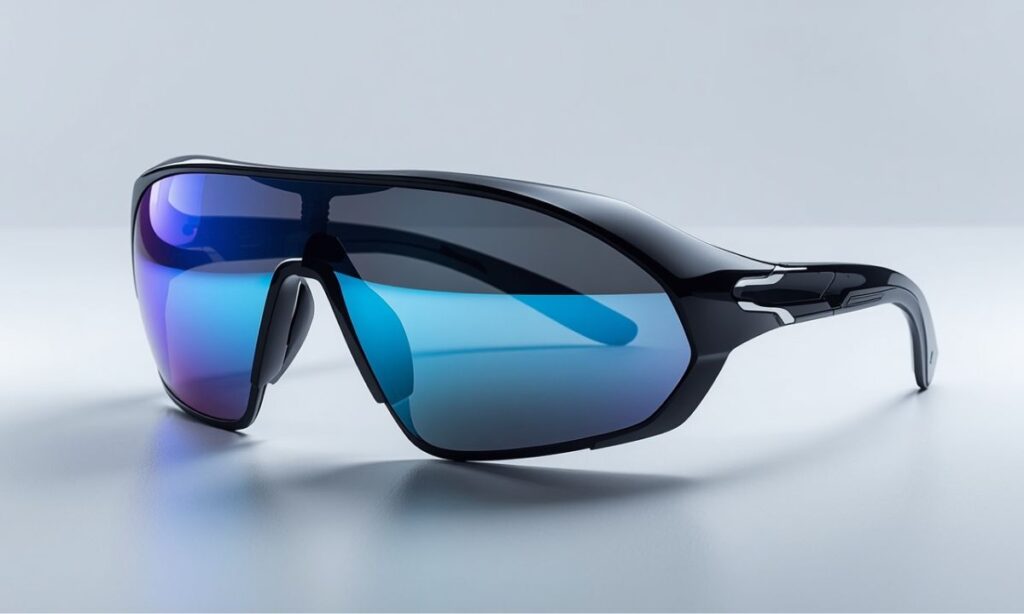
Shield sunglasses typically use one large, continuous lens or a design that visually connects the lenses across the face. Their broad shape creates a futuristic appearance that has become popular in sports eyewear and contemporary fashion.
Some shield frames are streamlined and athletic, while others use reflective lenses and exaggerated proportions.
Common shield sunglasses features include:
- Wide lens coverage across the front of the face.
- A single-lens appearance in many designs.
- Futuristic lines and contemporary styling.
- Sport-oriented and fashion-focused variations.
- Mirrored, tinted, and other lens treatments.
Shield sunglasses may suit oval and longer face shapes, but the correct width and curvature matter. Because these frames can be visually dominant, it helps to balance them with simple clothing if you want the sunglasses to remain the main statement.
For sports use, check the model’s impact resistance, optical clarity, and suitability for the activity. A fashionable shield design should not automatically be treated as protective sports equipment.
13. Sports Sunglasses: Built for Movement and Performance
Sports sunglasses are designed for people who spend time running, cycling, hiking, skiing, fishing, or participating in other outdoor activities. Unlike purely fashion-oriented frames, they often prioritize stability, durability, coverage, and visual clarity.
Some sports sunglasses use wraparound frames, while others have interchangeable lenses or specialized designs for particular conditions.
Features to look for in sports sunglasses:
- Lightweight and durable frame materials.
- Secure nose pads and temple grips.
- Appropriate impact resistance.
- Lens options suited to the activity.
- Useful coverage against wind and peripheral light.
- Clear vision and a comfortable fit during movement.
Polarized lenses can reduce reflected glare from surfaces such as water and roads, making them useful for some outdoor situations. However, they may make certain digital displays harder to read, and they are not automatically the best choice for every sport.
For skiing, cycling, and other activities with specific hazards, choose eyewear designed for the conditions rather than relying on appearance alone.
14. Butterfly Sunglasses: Elegant, Wide, and Expressive
Butterfly sunglasses feature wide lenses and outer edges that resemble butterfly wings. Their sweeping shape creates a glamorous look and can range from softly rounded designs to dramatic, angular frames.
They are often associated with oversized fashion, but smaller butterfly styles can be surprisingly wearable for everyday use.
Why butterfly sunglasses remain appealing:
- Wide frames create a distinctive silhouette.
- The shape adds a glamorous touch to simple outfits.
- Different sizes offer subtle or dramatic styling.
- They are available in acetate, plastic, and mixed materials.
- Many designs combine curved lines with lifted outer corners.
Butterfly sunglasses are often recommended for diamond-shaped, oval, and heart-shaped faces. Their width can balance prominent cheekbones, while softer curves may complement angular facial features.
For a versatile look, consider a medium-sized frame in black, brown, or tortoiseshell. If you’re after something more expressive, patterned acetate or colored lenses can add personality without changing your entire wardrobe.
Other Sunglasses Styles Worth Exploring
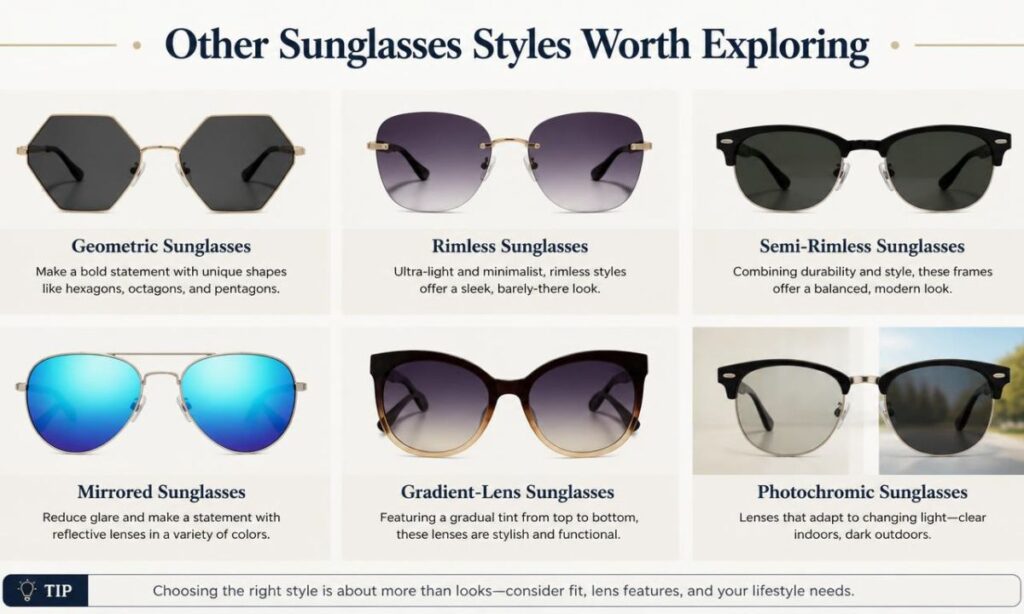
The 14 designs above cover many of the best-known options, but they are only part of the eyewear world. A few additional styles are worth knowing about when comparing sunglasses frame shapes.
Geometric Sunglasses
Hexagonal and octagonal sunglasses use angular outlines to create a contemporary appearance. They are useful for people who want something more distinctive than conventional square or round frames.
Rimless Sunglasses
Rimless sunglasses have lenses with little or no surrounding frame material. Their understated construction can create a lightweight visual effect, although durability depends on the design and materials.
Semi-Rimless Sunglasses
Semi-rimless frames have a visible rim around only part of the lens. They offer a balance between the minimal appearance of rimless eyewear and the more defined look of full frames.
Mirrored Sunglasses
Mirrored sunglasses have a reflective coating on the outside of the lenses. The coating can reduce some incoming visible light, depending on the lens, but it does not replace the need for verified UV protection.
Gradient-Lens Sunglasses
Gradient lenses are darker at one part of the lens and gradually become lighter toward another. They can be convenient when you want some sun reduction while maintaining a clearer view through the lighter portion.
Photochromic Sunglasses
Photochromic lenses change their darkness in response to UV exposure and other environmental conditions. Their performance varies, and many do not darken as much behind a vehicle’s UV-filtering windshield.
These options can overlap with classic frame shapes. For example, you might find mirrored aviators, rimless rectangular frames, or geometric sunglasses with gradient lenses.
How to Choose Sunglasses for Your Face Shape
Understanding your facial proportions can help narrow your options, but face-shape recommendations are flexible guidelines rather than strict rules. The most important factors are fit, comfort, personal preference, and how the frames look to you.
Sunglasses for Oval Faces
Oval faces generally have balanced proportions, with the face longer than it is wide and relatively gentle contours.
Styles worth trying:
- Aviator sunglasses.
- Wayfarer sunglasses.
- Square sunglasses.
- Rectangular sunglasses.
- Clubmaster sunglasses.
- Oversized sunglasses.
Many frame shapes can work with oval faces. Focus on selecting a width that feels proportionate rather than choosing frames that overwhelm or appear too narrow.
Sunglasses for Round Faces
Round faces typically have softer curves, with similar proportions across the width and length of the face.
Styles worth trying:
- Square sunglasses.
- Rectangular sunglasses.
- Wayfarer sunglasses.
- Navigator sunglasses.
- Cat-eye sunglasses.
Angular frames can introduce visual contrast and definition. If you prefer round sunglasses, experiment with slightly larger or more structured versions rather than assuming they won’t suit you.
Sunglasses for Square Faces
Square faces often have a broad forehead, defined jawline, and more angular facial features.
Styles worth trying:
- Round sunglasses.
- Aviator sunglasses.
- Oval sunglasses.
- Butterfly sunglasses.
- Cat-eye sunglasses.
Curved frames can soften the overall appearance, while rounded aviators provide a familiar option. You can also choose angular frames if you prefer emphasizing rather than softening your features.
Sunglasses for Heart-Shaped Faces
Heart-shaped faces often have a wider forehead and a narrower chin, sometimes with prominent cheekbones.
Styles worth trying:
- Aviator sunglasses.
- Round sunglasses.
- Cat-eye sunglasses.
- Butterfly sunglasses.
- Some navigator sunglasses.
Frames with balanced proportions can complement the upper face without appearing too heavy. Pay attention to the width of the temples and the way the frame sits across your cheekbones.
Sunglasses for Diamond-Shaped Faces
Diamond-shaped faces often have prominent cheekbones, with a narrower forehead and chin.
Styles worth trying:
- Round sunglasses.
- Clubmaster sunglasses.
- Butterfly sunglasses.
- Oversized sunglasses.
- Oval sunglasses.
Curved and wider frames may complement prominent cheekbones, but frame height and width should remain comfortable. Avoid selecting a pair based solely on a face-shape chart.
Sunglasses for Rectangular Faces
Rectangular faces are generally longer than they are wide, with relatively straight sides.
Styles worth trying:
- Wayfarer sunglasses.
- Square sunglasses.
- Clubmaster sunglasses.
- Oversized sunglasses.
- Shield sunglasses.
Frames with some height or width may create a balanced appearance. Extremely narrow designs can emphasize facial length, so compare different proportions before deciding.
UV Protection, Polarized Lenses, and Eye Safety
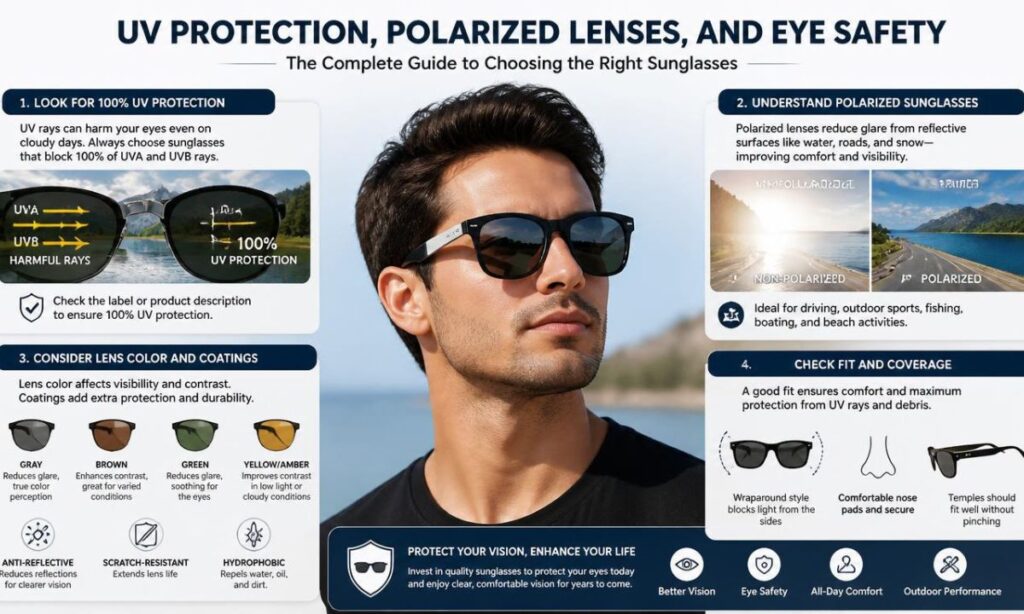
Fashion matters, but eye protection deserves equal attention when choosing sunglasses. A stylish frame is only part of the picture; lens quality and coverage are just as important.
Look for 100% UV Protection
Choose sunglasses labeled 100% UVA and UVB protection or UV400. These specifications indicate that the lenses are designed to block harmful ultraviolet radiation across the relevant range.
UV protection is not determined by how dark the lenses look. Dark lenses without adequate UV protection can be a poor choice, because your pupils may widen in dimmer conditions while harmful UV radiation still reaches the eyes.
Long-term UV exposure is associated with eye problems, including cataracts and certain other eye conditions. Wearing suitable sunglasses outdoors is a practical way to reduce unnecessary exposure.
Understand Polarized Sunglasses
Polarized lenses contain a filter designed to reduce glare from reflective surfaces such as roads, water, and snow.
They can be useful for driving, boating, fishing, and many everyday outdoor activities. However, polarization is different from UV protection. Check the UV specifications separately, and remember that polarized lenses may affect the visibility of some screens.
Consider Lens Color and Coatings
Gray lenses generally maintain relatively natural color perception, while brown or amber lenses can increase perceived contrast in some conditions. The best choice depends on your activity, environment, and individual visual needs.
Mirrored coatings and anti-reflective treatments can offer additional functional benefits, but their exact effects vary by product.
Check Fit and Coverage
Your sunglasses should sit comfortably on your nose and ears without slipping, pinching, or obstructing your vision. Wider frames and curved designs can help limit light entering from the sides, although no ordinary frame completely eliminates all peripheral exposure.
For sports and high-risk activities, choose eyewear that meets the appropriate safety requirements.
Sunglasses Frame Materials: What Should You Choose?
The frame material influences weight, durability, appearance, and comfort. There is no single material that works best for everyone, so consider how and where you plan to wear your sunglasses.
Plastic and Acetate Frames
Plastic frames are available in countless colors, shapes, and price ranges. Acetate frames, a type of material commonly used in eyewear, can offer rich colors and patterned finishes.
They are often found in Wayfarer, square, cat-eye, and oversized designs.
Metal Frames
Metal frames are common in aviators, navigators, and some round sunglasses. They can create a slim, refined appearance, although weight and durability vary by the specific metal and construction.
Check the nose pads and bridge design to make sure the glasses remain comfortable throughout the day.
Lightweight Performance Materials
Sports sunglasses may use specialized plastics or other engineered materials designed for low weight and durability. Their suitability depends on the activity and product specifications.
Whatever the material, inspect the hinges, nose pads, and temples. A beautiful frame that constantly slides down your nose will probably spend more time in a drawer than on your face.
How to Match Sunglasses With Your Personal Style
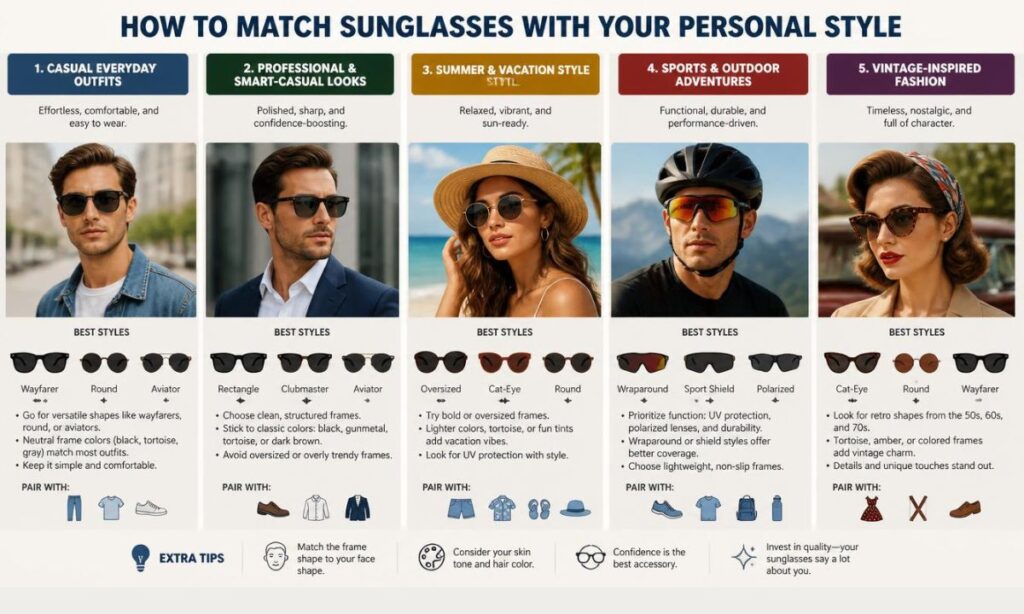
Finding sunglasses that complement your face is useful, but matching them with your everyday wardrobe makes them more practical.
For Casual Everyday Outfits
Wayfarer, rectangular, and classic aviator sunglasses can work with jeans, T-shirts, sneakers, and relaxed clothing. Neutral colors are especially versatile if you want one pair for regular use.
For Professional and Smart-Casual Looks
Slim rectangular frames, subtle navigators, and Clubmaster sunglasses can complement button-down shirts, tailored jackets, and other polished outfits.
Choose a design that feels comfortable rather than overly formal.
For Summer and Vacation Style
Oversized, butterfly, and cat-eye sunglasses can pair well with summer dresses, linen clothing, swimwear, and resort outfits. Lighter frame colors or tortoiseshell patterns can create a softer seasonal look.
For Sports and Outdoor Adventures
Wraparound and purpose-built sports sunglasses are often practical for cycling, hiking, running, and other activities that involve movement.
Prioritize stability, coverage, and appropriate lens specifications over fashion alone.
For Vintage-Inspired Fashion
Round frames, browline designs, Clubmaster sunglasses, and classic cat-eye styles can complement retro clothing and accessories.
You can keep the rest of your outfit simple if you want the sunglasses to stand out.
Common Mistakes to Avoid When Buying Sunglasses
Even attractive sunglasses can be disappointing if they don’t fit properly or meet your needs.
- Choosing appearance over UV protection: Always verify the lens specifications rather than judging by lens darkness.
- Ignoring frame width: Frames that are too narrow or too wide may feel uncomfortable or look disproportionate.
- Assuming polarization means UV protection: These features serve different purposes and should be checked separately.
- Buying frames that slide down: A poor bridge fit can make sunglasses frustrating to wear.
- Following face-shape rules too rigidly: Use style guides for inspiration, not as a list of forbidden designs.
- Ignoring your main activity: Sunglasses for a beach day may not be suitable for cycling or specialized sports.
- Overlooking lens quality: Optical clarity, distortion, durability, and appropriate impact resistance matter.
- Forgetting maintenance: Scratched lenses and loose hinges can reduce comfort and usefulness.
A few minutes spent checking the fit and lens specifications can save you from buying sunglasses that look excellent in a product photo but disappoint in everyday use.
How to Choose the Right Pair of Sunglasses
If you’re unsure where to begin, try a simple process instead of comparing every available frame.
- Start with your needs: Decide whether you want everyday eyewear, driving sunglasses, sports protection, or a statement accessory.
- Try several shapes: Compare angular frames with rounded designs, and test different widths and lens heights.
- Check the fit: Make sure the bridge, temples, and frame width feel comfortable.
- Verify UV protection: Look for 100% UVA and UVB protection or UV400.
- Consider your wardrobe: Neutral colors are versatile, while unusual shapes and colors can express your personality.
- Think about durability: Choose construction and materials appropriate for how frequently you will wear the sunglasses.
If possible, try sunglasses in natural daylight before making your final decision. A frame that looks striking under bright store lighting may feel different outdoors, and comfort becomes especially important when you’ll wear it for several hours.
Explore More Blog : Unisex T Shirt Sizes
Frequently Asked Questions
What Are the Most Popular Styles of Sunglasses?
Aviator, Wayfarer, round, rectangular, cat-eye, square, and oversized sunglasses are among the widely recognized styles. Their popularity varies by fashion trends, location, and personal preference.
Which Sunglasses Style Is the Most Versatile?
Aviator and Wayfarer sunglasses are common choices for versatility because they pair well with many outfits. Classic rectangular frames are another option, especially if you prefer a more understated appearance.
The most versatile pair for you will depend on your wardrobe, face proportions, and preferred frame size.
Are Aviator and Navigator Sunglasses the Same?
No. Aviators typically have teardrop-shaped lenses, while navigators generally feature squarer or more geometric lenses. Both may use metal frames and double-bridge details, which is why they can look similar.
What Is the Difference Between Browline and Clubmaster Sunglasses?
Browline describes a frame style with a prominent upper rim and a thinner lower section. Clubmaster is a recognizable design associated with Ray-Ban that uses this general aesthetic. The terms are related, but not every browline frame is a Clubmaster.
Are Wayfarer Sunglasses Suitable for Every Face Shape?
Wayfarer frames can suit many face shapes, but the right width, lens height, and corner shape matter. Try different sizes to find a comfortable fit rather than assuming one design will work equally well for everyone.
What Is the Difference Between Polarized and Regular Sunglasses?
Polarized sunglasses use a filter that reduces certain types of reflected glare. Regular sunglasses may reduce brightness without providing the same glare-reduction effect. Neither category automatically guarantees UV protection, so check the product’s UV specifications.
How Can I Tell Whether Sunglasses Offer UV Protection?
Look for a clear label stating 100% UVA and UVB protection or UV400. When the labeling is unclear, ask the seller or optician for reliable confirmation rather than judging protection by lens color.
Are Oversized Sunglasses Still a Good Fashion Choice?
Oversized sunglasses remain a recognizable fashion option, but trends change over time. Their suitability depends on your taste, frame proportions, comfort, and the coverage they provide.
Conclusion
Exploring the different styles of sunglasses is about more than choosing a fashionable accessory. Aviators offer timeless appeal, Wayfarers provide an easy everyday option, cat-eye frames bring vintage glamour, and wraparound sunglasses support active outdoor lifestyles. Square, round, oversized, geometric, and shield designs each bring their own character to an outfit.
The best sunglasses balance appearance, fit, and eye protection. Consider your facial proportions, explore different frame materials, and choose lenses that provide reliable UV protection. If you spend time driving, cycling, hiking, or enjoying other outdoor activities, make sure your sunglasses are appropriate for those conditions.
Most importantly, don’t let fashion rules limit your choices. A pair that makes you feel confident and comfortable is worth far more than one selected simply because a trend says it suits your face.
Whether you prefer classic metal frames or bold oversized designs, there is a style waiting to become part of your everyday look. Which sunglasses style do you like most? Share your favorite frames, styling ideas, or eyewear-buying tips in the comments and help other readers discover their next favorite pair.
